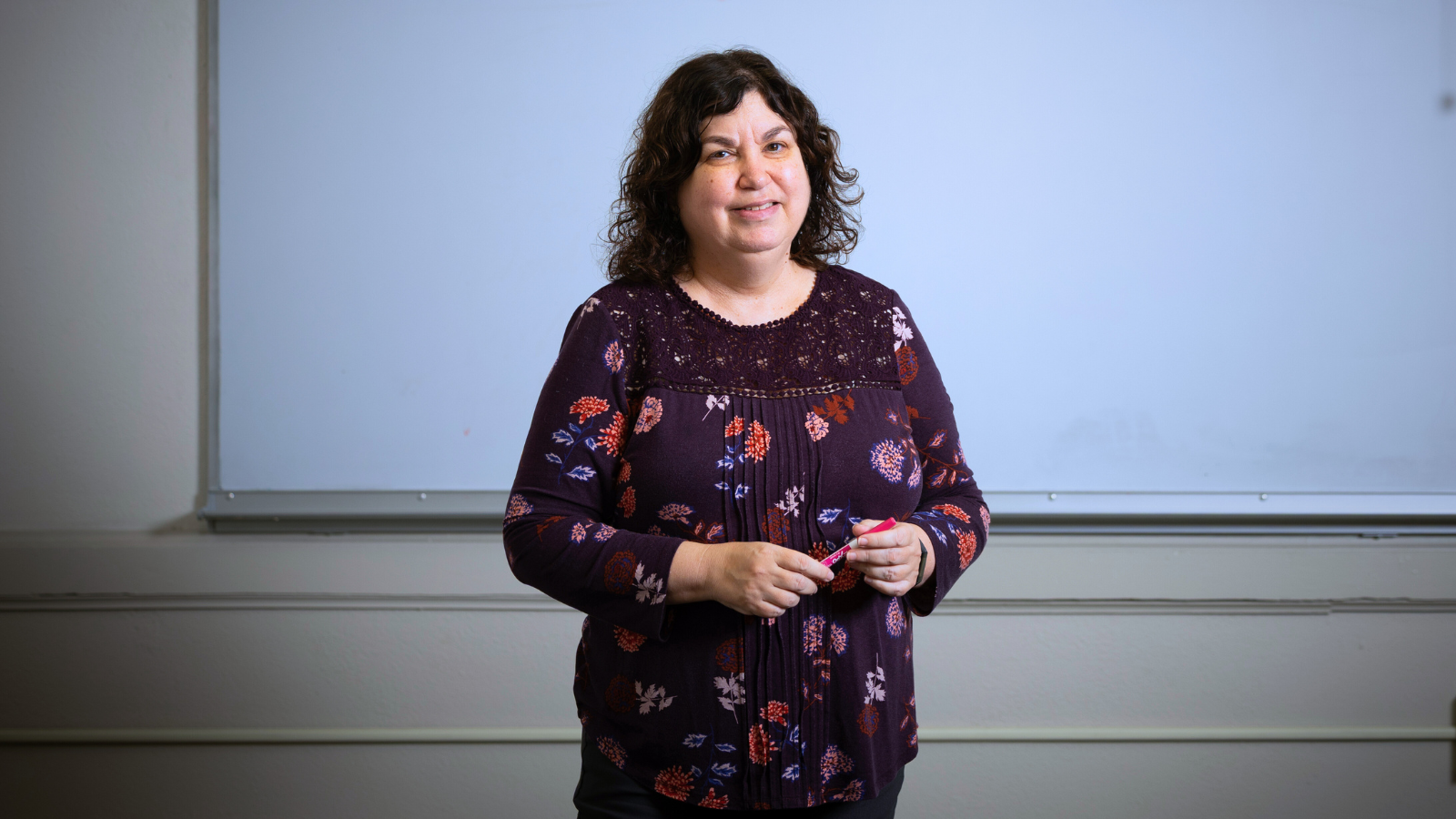
Dr. Roni Reiter-Palmon is a distinguished Professor in the Department of Industrial & Organizational (I/O) Psychology and the Director of the I/O Psychology Graduate Program at the University of Nebraska at Omaha (UNO). She also serves as the Director of Innovation for the Center for Collaboration Science and as a team lead for the National Counterterrorism Innovation (NCITE) in the area of workforce development. Her research focuses on creativity and innovation in the workplace, team creativity, development of teamwork and creative problem-solving skills, and leading creative individuals and teams. Her robust body of work includes more than 200 papers published in leading journals, placing her in the top 2 percent of faculty in her field. She has also published four edited books on the topic of creativity. She has obtained more than $8 million in grant and contract funding from government agencies like the National Science Foundation (NSF), Department of War (DOW) and Agency for Healthcare Research and Quality (AHRQ), along with businesses focusing on creativity, leadership and teams.
Q&A
Why are you interested in supporting national security?
I believe that national security is critical to the well-being of our nation. The attacks of 9/11 have shown that the U.S. can be vulnerable to terrorist attacks, and we should work to prevent those. Balancing this prevention, while at the same time keeping our rights, is an important balancing act. I believe that my own research on creativity, innovation and teamwork can support such efforts.
What national security challenges do you think you could help solve with your expertise?
1. The events of 9/11 have shown that when various agencies do not collaborate and share information, this results in negative outcomes. However, collaboration across agencies is not easy. My research on teams and teamwork, especially interdisciplinary teams, can help facilitate such collaboration.
2. Creativity and innovative thinking are critical for addressing the challenges ahead. My work on skills and skill development of creativity and innovative thinking can be beneficial. In addition, understanding how teams can develop creative ideas and solutions to problems would be beneficial.
3. Using Artificial Intelligence (AI) to improve creative and innovative thinking. AI can be beneficial to creativity and innovation, but it can also stifle creative thinking. Balancing the two requires an understanding of how and when AI is beneficial and training in the effective use of AI.
4. Economic strength and innovation will be a protective factor for the U.S. How can we improve creative and innovative thinking skills at all levels? From students in K-12, employees, college students and military personnel — our ability to come up with innovative ideas will be a source of growth for the economy and effective responses to threats.
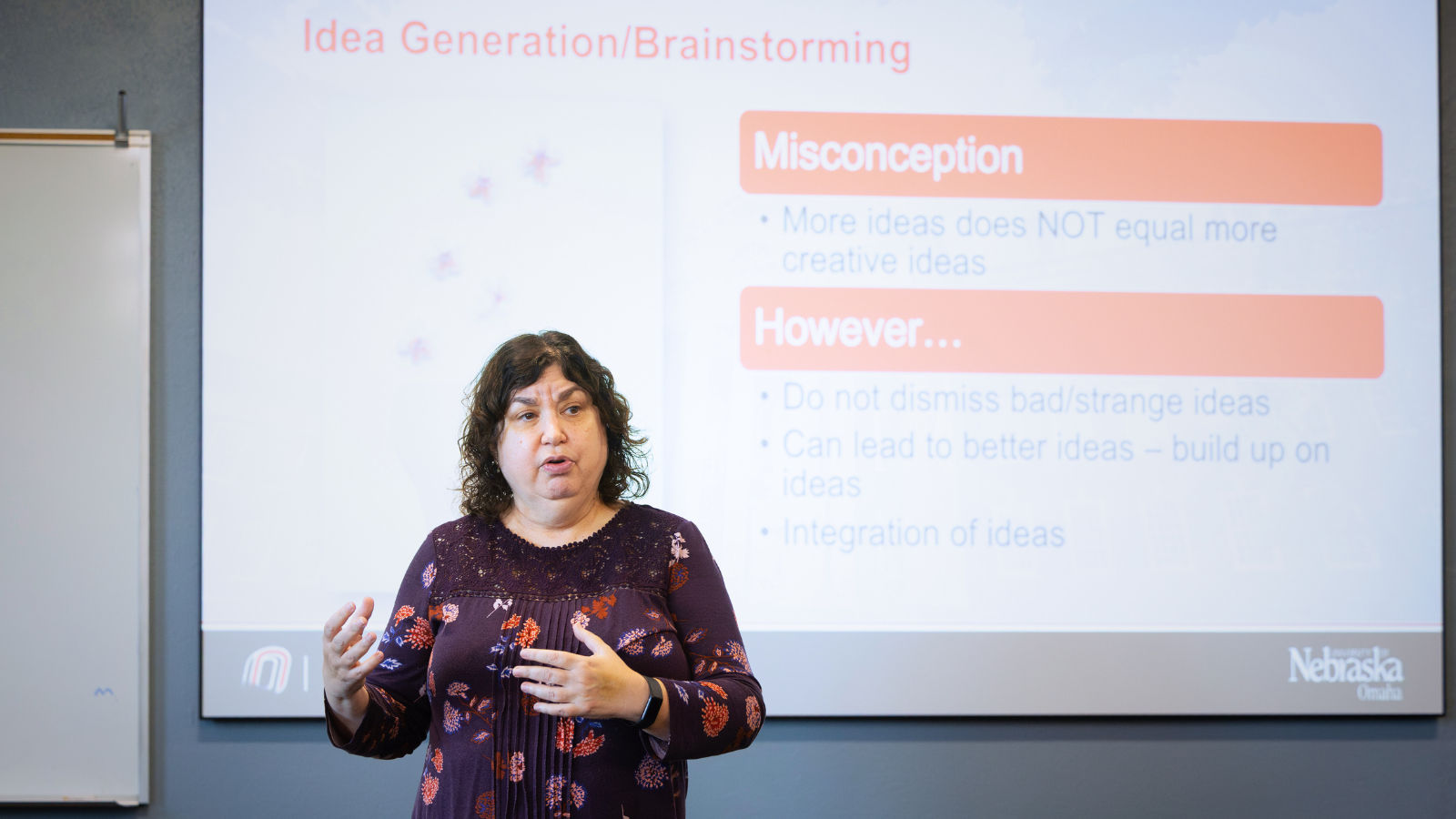
Read more about Dr. Reiter-Palmon's research on creativity and innovative thinking:
- How Crises May Relate to Creativity and Innovation: An Introduction
- Developing, Testing, or Extending Theory with Meta-analyses
- Team Cognition and Team Creativity
What do you see in the next five to ten years in your space that you think is important for national security leaders to consider?
AI is going to be used and understanding how we can get ahead of the way our adversaries will use it is important.
- How can the U.S. continue to be the innovative nation that it is?
- How can we promote creative thinking at all levels and promote continued innovation?
- How can we better understand malevolent creativity and use that knowledge to deter terrorism and crime?
What are you working on now that excites you?
My research team and I are working on a project funded by the Army Research Institute focusing on how to use AI for scoring open-ended responses to creative problem-solving items. This is one of the best ways to measure creative problem solving but is not used much outside of research as it is time consuming to develop items and then score them manually. Creativity cannot be measured with multiple choice! We are finding that AI can do a good job in scoring, which then allows the use of creative problem solving for decisions about promotions, course assignments and so on for the military.
My team just completed a four-year project looking at team creativity and how to improve it. We recorded team interactions and evaluated them for various aspects of the creative problem-solving process, such as problem framing, idea generation and idea evaluation.
We also integrated a debrief training and found that when teams debriefed, they were indeed more creative on subsequent creative problem-solving exercises and spent more time framing the problem.
Finally, we are looking at malevolent creativity — or the use of creativity for harm (i.e., terrorism, crime). Ideas generated need to be both harmful and original. Several interesting findings have emerged: Those who are more creative in general are also able to come up with more malevolently creative ideas. People generally avoid choosing harmful ideas when asked what they would do but can identify the most malevolently creative ideas when they are offered.
We were able to show that how people frame the problem also influenced how willing they were to generate malevolently creative ideas. We hope that a better understanding of this will lead to better ways of foiling malevolent creativity targeting our national security.
Learn more about Dr. Reiter-Palmon via her UNO Bio.