Senior leaders, technical experts and first response partners across the Midwest gathered at the University of Nebraska–Lincoln in May for AG Attacks at Dawn, a full day tabletop exercise designed to pressure test regional readiness for an intentional release of foot-and-mouth disease.
Sponsored by the Nebraska Department of Agriculture and facilitated by the National Strategic Research Institute (NSRI) at the University of Nebraska, the exercise advanced a shared mission: protecting U.S. agricultural infrastructure, livestock health and the nation’s food supply in the face of deliberate biological threats.
“We are appreciative to NSRI for convening this exercise on such a large scale to create effective preparedness for the response to potential threats such as foot-and-mouth disease,” said Sherry Vinton, Director of the Nebraska Department of Agriculture. “The health of Nebraska and U.S. livestock is instrumental to the stability of the economy and our food systems. Our readiness to respond to these threats in the future will help mitigate the consequences.”
Meghan Jackson, NSRI and IANR director for food, agriculture and environment security, said the threat environment continues to demand coordinated preparedness.
“Transboundary animal diseases like foot-and-mouth disease pose substantial economic and animal welfare risks,” Jackson said. “Events like this one strengthen regional preparedness. They provide an opportunity for federal and state agencies and their industry stakeholders to increase awareness of policies and response efforts, identify best practices and build resilience across the agricultural sector.”
The exercise challenged participants to confront the realities of cross-sector response to diseases capable of inflicting catastrophic economic and operational consequences. Close to 90 representatives from federal and state agriculture departments, diagnostic laboratories, law enforcement, National Guard units, academia and industry collaborated throughout the day. Their engagement underscored the need for rapid, unified action across civilian and military authorities in a real-world attack scenario.
Attendees were immersed in a realistic, multi-module scenario that spanned the first year of an intentional release. NSRI developed and facilitated modules covering detection, quarantine operations, movement control, depopulation and repopulation complexities and long-term recovery.
Participants were divided into groups focused on laboratory response, law enforcement and senior‑official coordination agricultural field operations. They navigated evolving information using AI‑generated media updates that simulated real‑time incident pressure. Each decision point required teams to consider vaccine availability, jurisdictional authority, biosecurity measures and interagency information flow.
The range of participation was essential. Representatives contributed perspectives from animal health diagnostics, emergency management, agricultural — including crops — production, security operations and military support functions. Their collective input validated existing communication strengths while highlighting areas where intentional-threat environments demand deeper planning and integration.
Following the exercise, NSRI delivered an after-action report for the Nebraska Department of Agriculture to help guide future preparedness efforts.
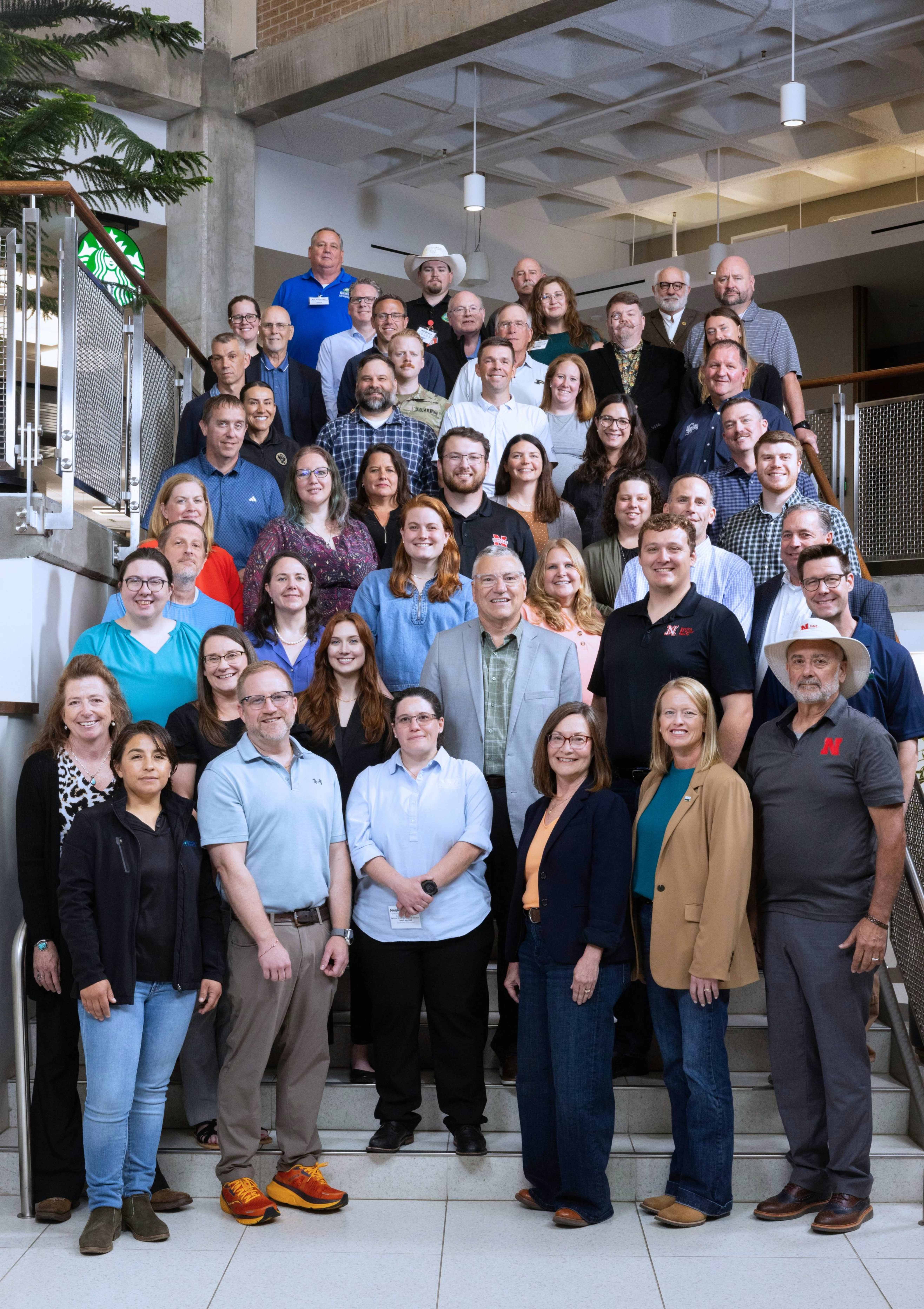
The event also supported workforce development. Students from UNL and National Counterterrorism Information, Technology and Education Center served as trained notetakers and later met with Jackson to learn how after-action reports are built. The experience connected academic talent with real national security missions and broadened awareness of agricultural biosecurity careers.
Jackson noted that NSRI’s role as an independent facilitator remains a decisive advantage for agricultural defense.
“Many agencies don’t have the resources for facilitating an exercise like this one or convening the spectrum of responders and stakeholders,” she said. “Because we are an objective third-party, subject matter experts capable of crafting realistic scenarios and our affiliation with the University of Nebraska, NSRI is able to support federal and state partners and producers strengthen the nation’s capability to deter and respond to high consequence threats.”
As regional partners explore opportunities for a full-scale exercise, AG Attacks at Dawn demonstrated how deliberate, scenario-based training sharpens resilience and decision advantage. By validating processes, reinforcing coordination and elevating shared understanding, the engagement strengthened readiness to respond decisively to intentional threats targeting U.S. agriculture.