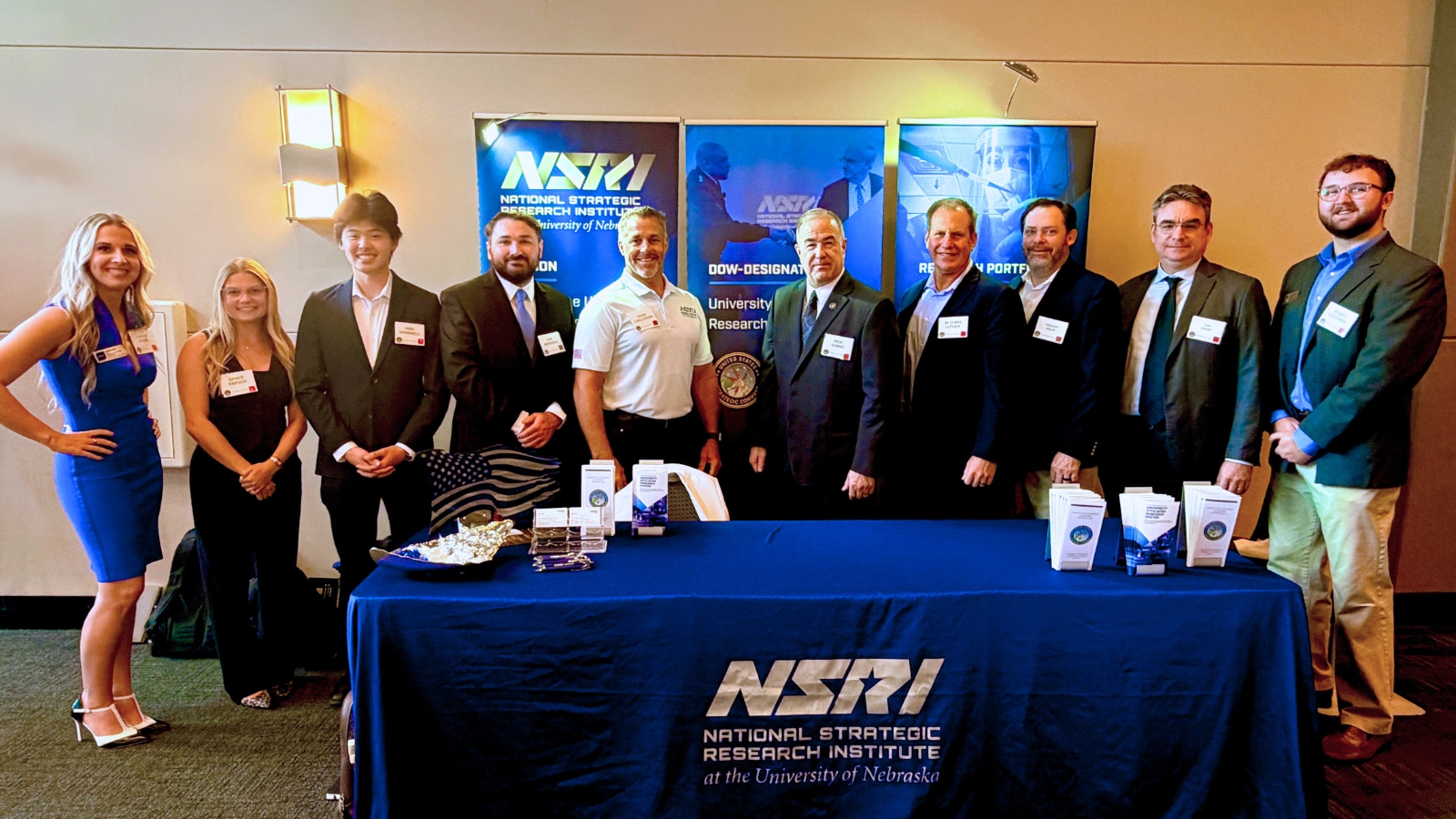
The National Strategic Research Institute (NSRI) at the University of Nebraska showcased Nebraska research, technology and expertise at two major U.S. Department of War (DOW) conferences last week: the U.S. Strategic Command (USSTRATCOM) Deterrence Symposium and the Military Health System Research Symposium (MHSRS).
Together, the conferences brought together leaders, researchers, military practitioners and industry partners focused on some of the nation’s most consequential defense challenges — from strategic deterrence and nuclear policy to military medicine and readiness.
As the DOW-designated University Affiliated Research Center (UARC) sponsored by USSTRATCOM, NSRI connects Nebraska researchers and students with federal defense and national security missions. Its presence at both conferences demonstrated the breadth of University of Nebraska capabilities and the System’s ability to connect university expertise directly with federal defense priorities.
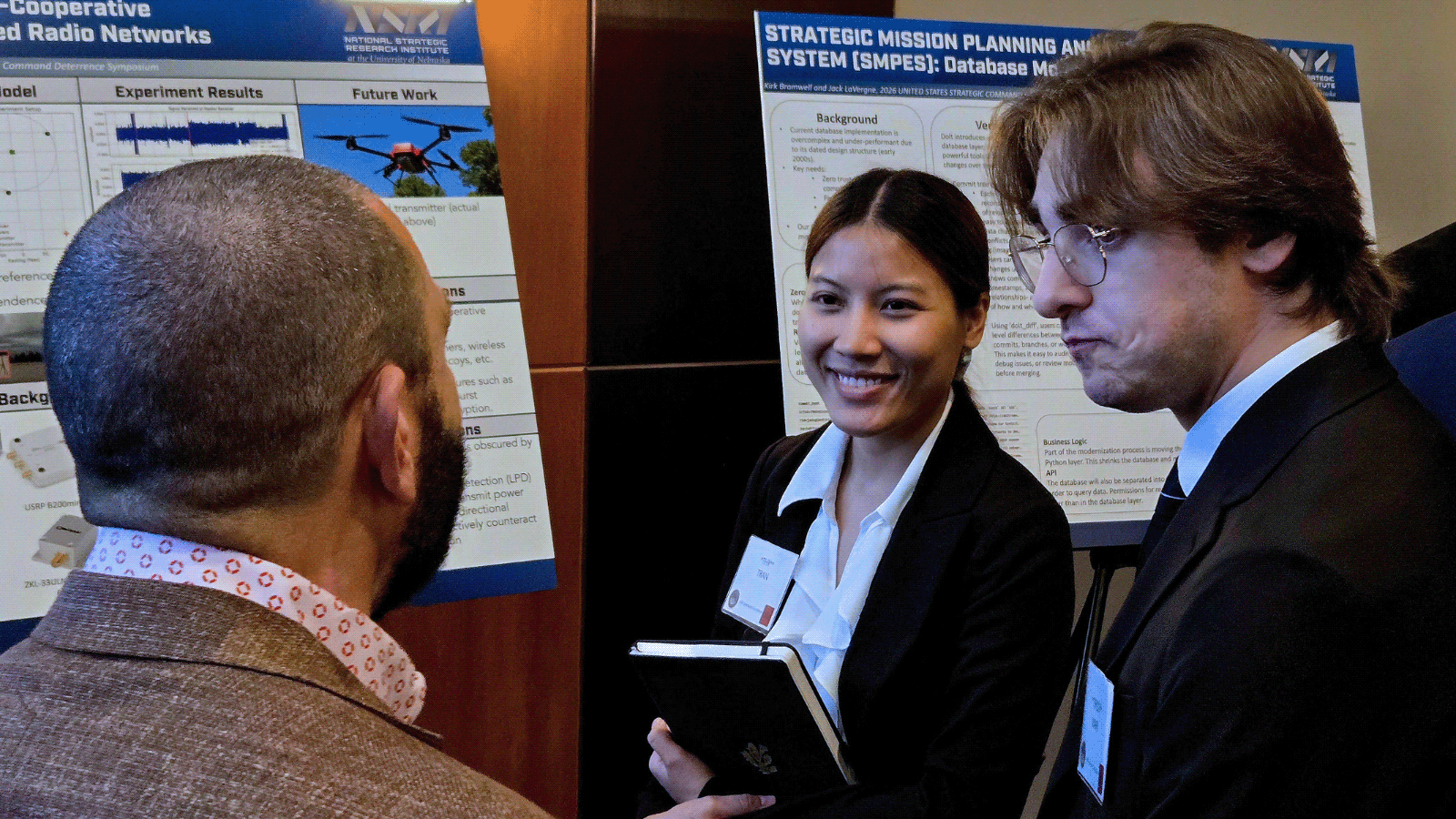
The Deterrence Symposium is a national forum focused on the evolving strategic security environment and the role of deterrence in maintaining U.S. and allied security. The event brings together senior military leaders, government officials, academics and industry experts to examine strategic deterrence challenges and opportunities.
NSRI exhibited and presented research supporting USSTRATCOM’s strategic deterrence mission. Featured work included:
- Locating Non-Cooperative Emitters Using Software-Defined Radio Networks
- Strategic Mission Planning and Executive System: Database Modernization
NSRI’s participation provided an opportunity to engage directly with strategic deterrence leaders and demonstrate how the institute and University of Nebraska can support work advancing understanding of the U.S. nuclear posture, limited nuclear conflict, and the effects of foreign nuclear capabilities and intentions.
NSRI’s strategic deterrence capabilities span nuclear education and policy, escalation dynamics, decision support and tabletop exercises; nuclear security, nonproliferation and detection technologies; survivability, NC3 and electromagnetic spectrum operations; advanced materials and manufacturing; and arms control, verification and diplomatic engagement.
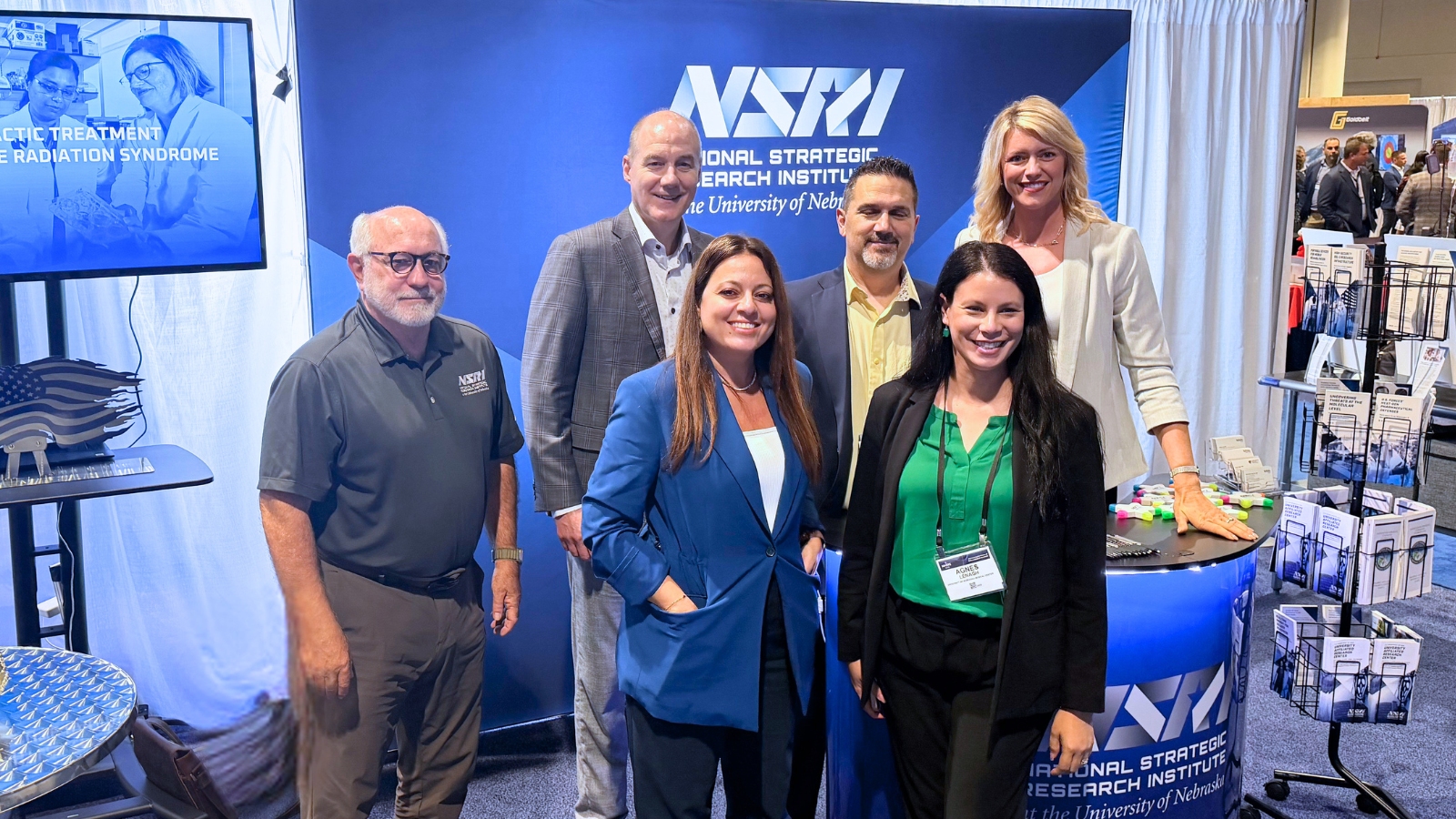
At MHSRS 2026, NSRI and University of Nebraska researchers showcased technologies and research addressing CBRNE threats, medical readiness and warfighter performance. The exhibit featured:
- Prophylactic treatment for acute radiation syndrome
- SWaP-optimized radiation detection electronics
- Real-world knee monitoring for warfighter readiness
- Real-time gait intelligence for soldier readiness
- Resistance-proof therapeutics designed to return warfighters to duty faster
- US-MRA™ Medical Readiness Atlas, a national CBRNE healthcare workforce intelligence system
Beyond the featured technologies, NSRI connects DOW partners with broad University of Nebraska capabilities across the medical CBRNE mission. These include disaster medicine and global health security; high-consequence pathogen management, response and training; vaccine, therapeutic and diagnostic discovery and development; and military health, human performance and rehabilitation. Together, these multidisciplinary capabilities enable NSRI and university researchers to address complex threats across the full continuum — from preparedness and prevention to detection, treatment, recovery and warfighter readiness.
NSRI’s participation at both conferences highlighted a distinctive strength of the University of Nebraska: the ability to bring together multidisciplinary research expertise and connect it directly to high-priority national security missions.
Learn more about NSRI’s research: nsri.nebraska.edu/capabilities.