The United States has entered a new era of defense — detection alone is no longer enough to address chemical and biological threats. Warfighters must act quickly and at scale in the face of challenges posed by bioconvergence, disruptive technologies, artificial intelligence (AI), shifting geopolitics and the democratization of technology, which gives destructive capabilities to more, and more varied, adversaries.
Solutions supporting the nation’s defense in this complex landscape lie in advanced, integrated technologies that are developed rapidly in secure, controlled research and development environments.
“The National Strategic Research Institute’s (NSRI) chemical and biological defense program (CBDP) is uniquely positioned to solve the emerging challenges of national security and support the U.S. Department of War (DOW) in this new era of chemical and biological defense (CBD),” said Marty Sikes, associate executive director for CBD programs at the National Strategic Research Institute (NSRI) at the University of Nebraska (NU). "Because we have expertise, equipment, spaces and an efficient contracting mechanism with the government in place, we can quickly and efficiently solve problems and deliver solutions that meet the military’s needs."
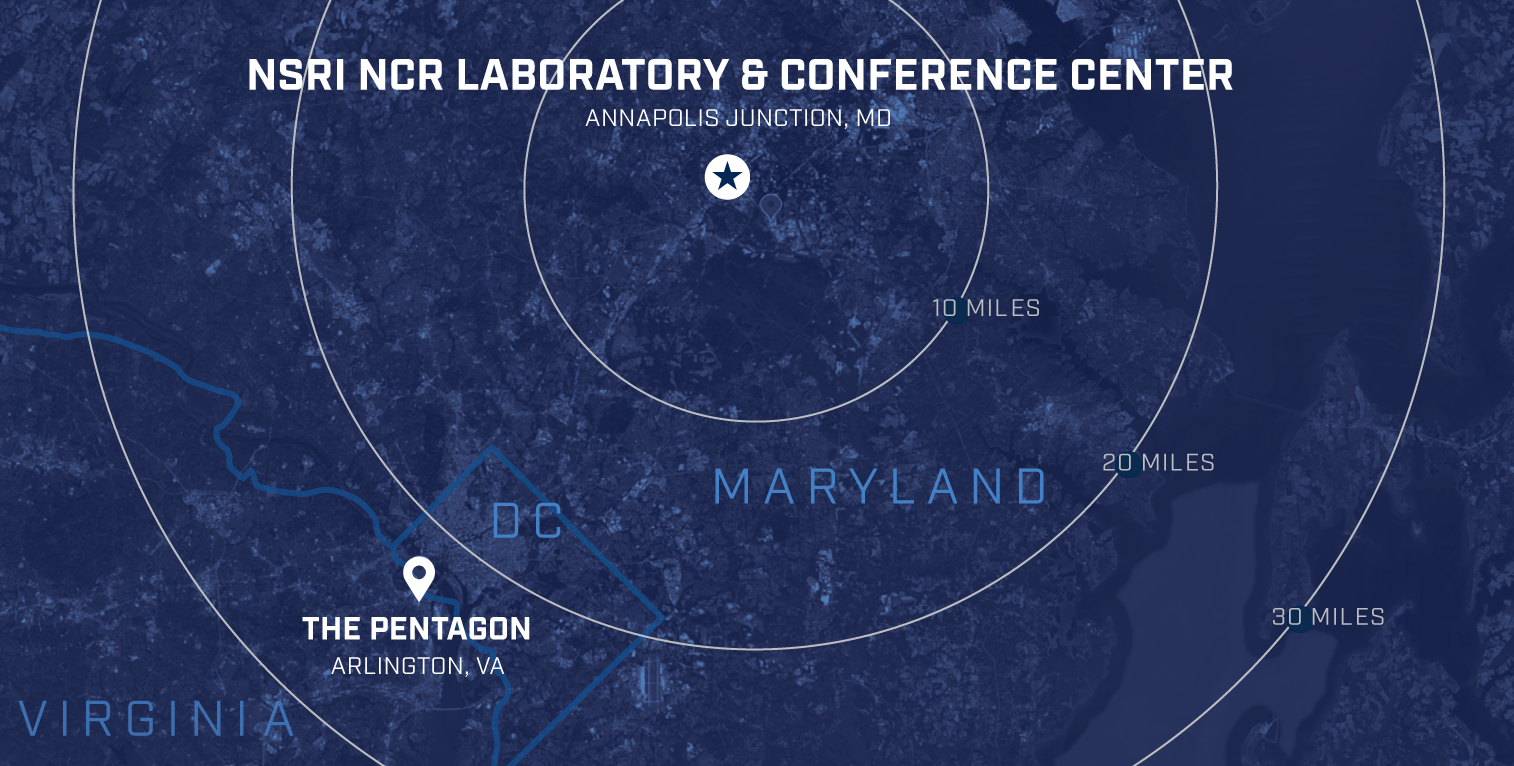
The NSRI National Capital Region (NCR) Laboratory and Conference Center is at the heart of the institute’s chemical and biological defense programs. Opened in 2016 through NU investments, the facility extended and focused the impact of NU and NSRI chemical and biological defense capabilities by bringing capacity to the doorstep of national security agencies.
Located in Annapolis Junction, Maryland, NSRI NCR lies within driving distance of the Pentagon, Fort Meade, Fort Detrick, the Defense Threat Reduction Agency (DTRA) headquarters and the office of the Capability Program Executive for Chemical, Biological, Radiological and Nuclear Defense. In total, 24 of NSRI’s primary customers are located in the national capital region.
"This laboratory and conference center have become a key collaboration hub for defense partners,” Sikes said. “It is a specialized facility equipped with unique capabilities required to conduct research, development, testing and evaluation to deliver on DOW needs, solving complex problems that apply directly to mission success and the safety of U.S. warfighters and U.S. citizens.”