United States national security depends on maintaining technological advantage and harnessing the people and expertise required to meet evolving mission needs.
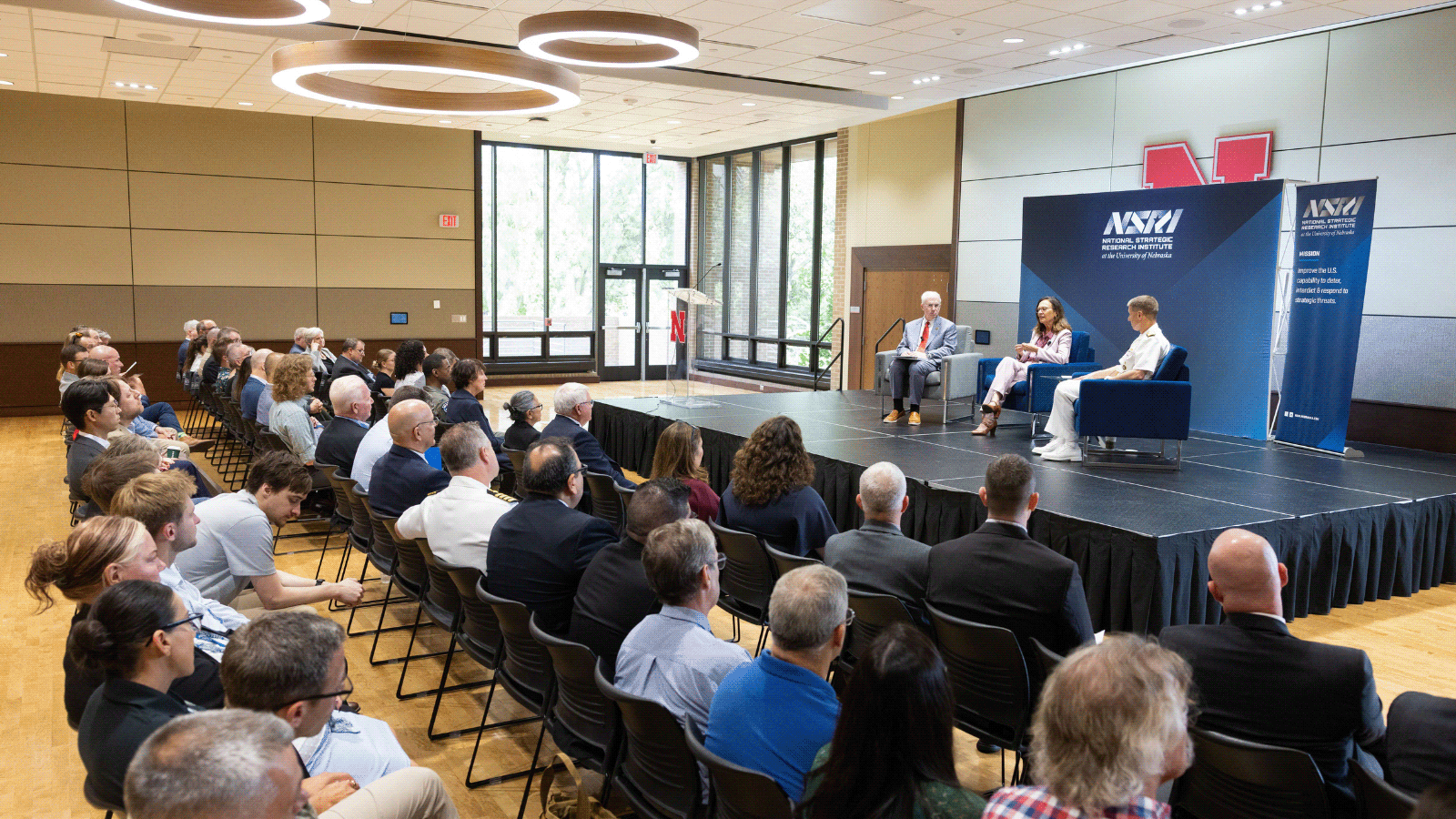
That imperative framed a dialoge among U.S. Sen. Deb Fischer of Nebraska, U.S. Navy Adm. Rich Correll, commander of U.S. Strategic Command (USSTRATCOM), and University of Nebraska System President Dr. Jeffrey P. Gold during the National Strategic Research Institute (NSRI) Research Showcase on September 8 at the University of Nebraska–Lincoln.
The dialogue was paired with an exhibition of 15 research displays, where speakers and federal, military, state and university leaders explored NSRI and University of Nebraska research spanning the institute’s research portfolio.
“The strategic environment is more complex than at any point in my lifetime," Adm. Correll said. “We face five major threat vectors — cyber, counter‑space, contested electromagnetic spectrum, novel missile systems and the supply chain. Every capability we deliver must account for these challenges to ensure we can generate military effects when and where the nation needs them.”
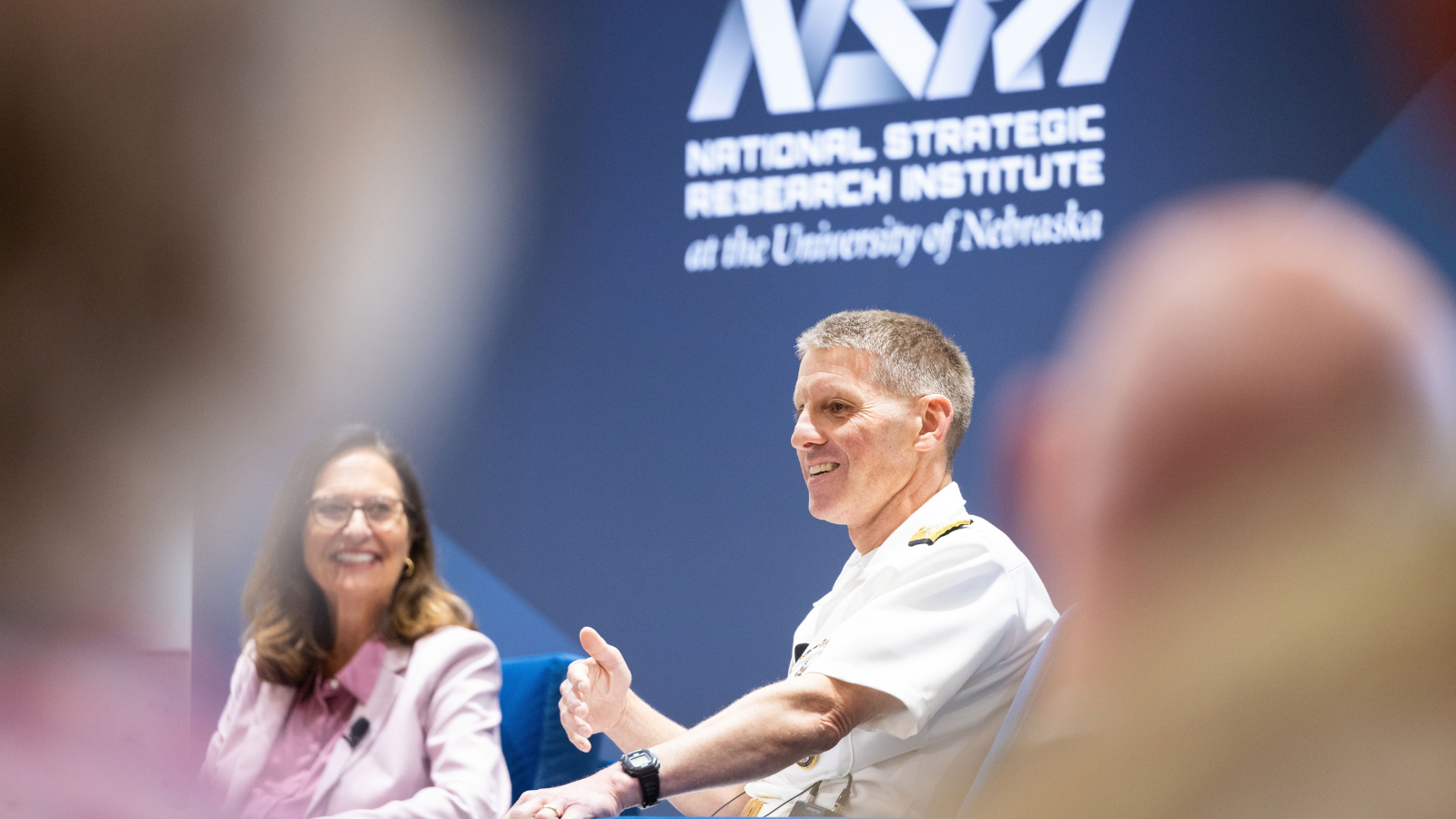
Throughout her remarks, Senator Fischer, a senior member of the Senate Armed Services Committee, outlined her efforts to strengthen America’s homeland defense, modernize the nuclear triad and missile defense systems, and protect important segments of the electromagnetic spectrum used by the U.S. military.
“As we look ahead, there are clear opportunities for the University of Nebraska to strengthen ties with STRATCOM — from collaborating on NC3 to advancing research on the electromagnetic spectrum to meet specific operational requirements,” she said. “Strong partnerships with STRATCOM allow the university to align its research to real mission needs — identifying where its expertise can advance deterrence, homeland defense and the capabilities our nation relies on.”
Facilitated by Dr. Gold, the dialogue gave attendees the opportunity to hear national security priorities firsthand and consider where their expertise could contribute.
NSRI convened the event as USSTRATCOM’s University Affiliated Research Center (UARC), one of 15 designated by the U.S. Department of War (DOW). Earlier this year, USSTRATCOM awarded NSRI its fourth indefinite delivery, indefinite quantity (IDIQ) contract, with a $500 million ceiling for research and development supporting DOW priorities. Through the UARC, NSRI connects scientists, students and technical experts across the University of Nebraska with federal sponsors to deliver research, technology, training and expertise for strategic deterrence and countering weapons of mass destruction.
“NSRI operates every day at the intersection of national policy, operational requirements and university capabilities,” said Maj. Gen. Rick Evans, USAF (Ret.), NSRI executive director. “Our responsibility is not simply to conduct research but to understand what our federal partners need, connect them with the right expertise and move that work toward meaningful mission outcomes.”
University of Nebraska–Lincoln Interim Chancellor Kathy Ankerson welcomed participants to campus, underscoring the university’s role in advancing the national security mission.
“National security work is the same charter this university accepted in 1869, putting knowledge to work on real problems for real people,” Ankerson said. “That capability is our people. The engineers, scientists and students apply their expertise to challenges that matter to the country.”
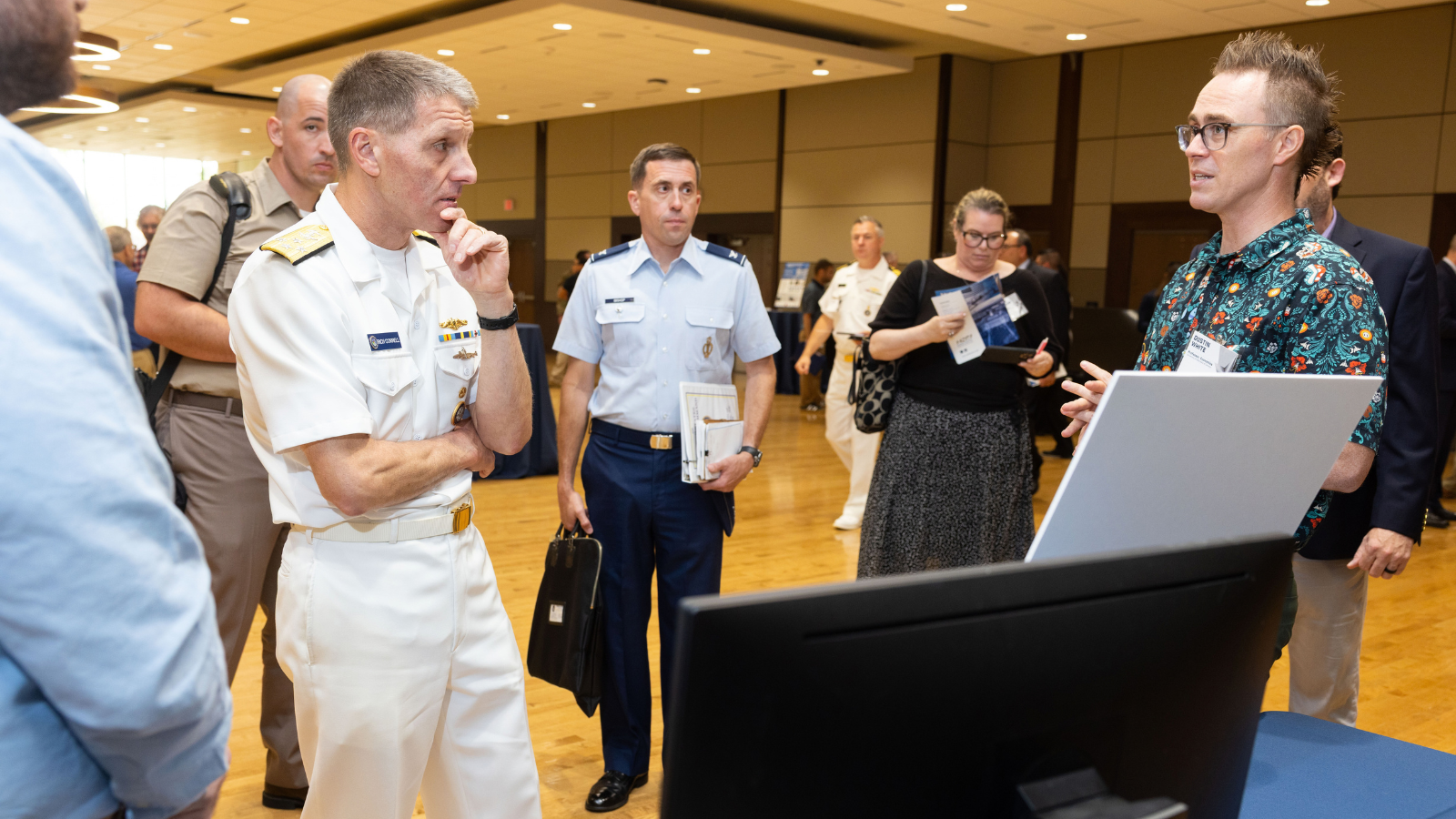
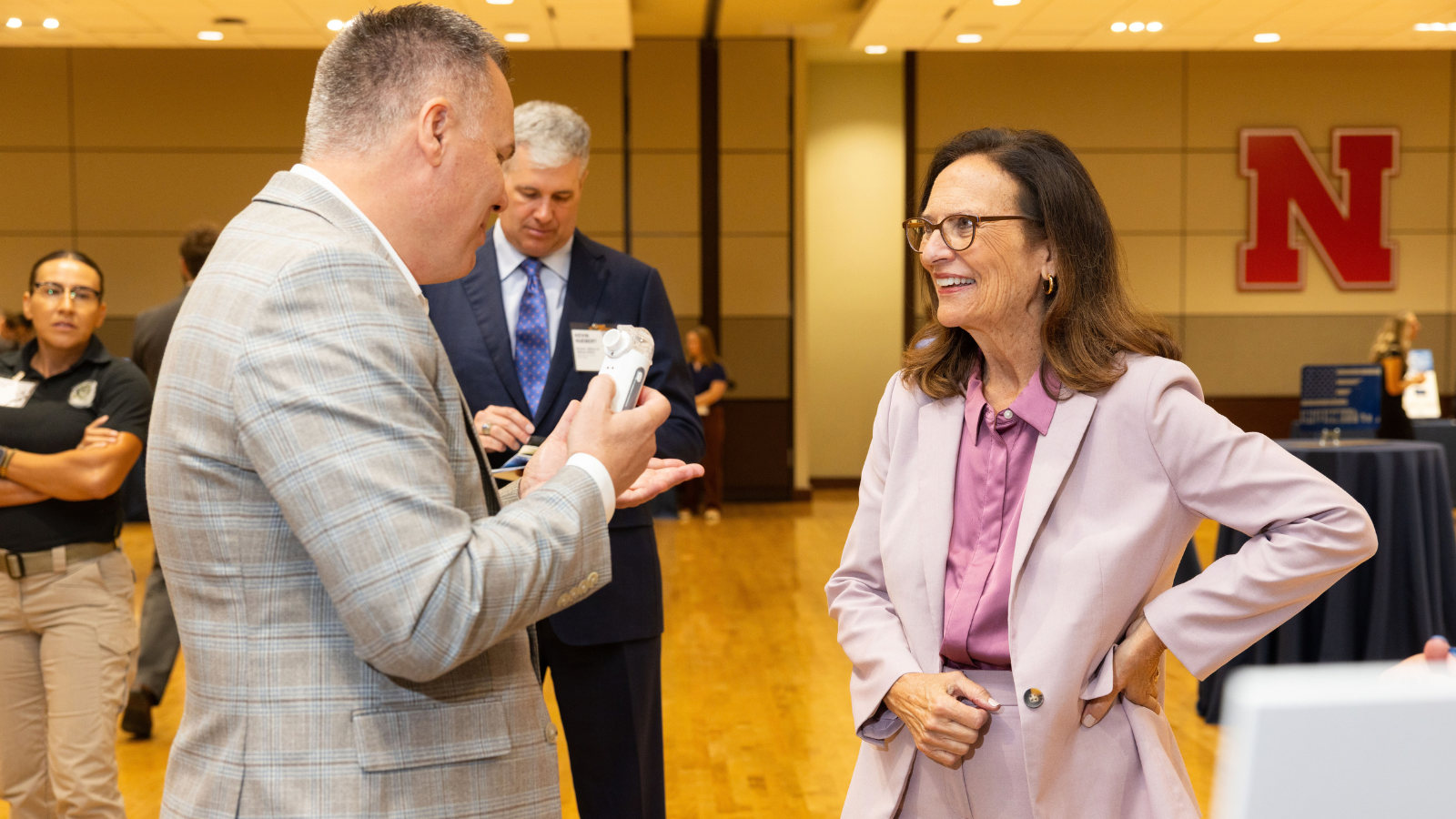
Following the dialogue, guests, including USSTRATCOM and 55th Contracting Squadron staff, engaged directly with researchers across the 15 exhibits. The exchanges gave federal partners firsthand perspectives on the research, expertise and capabilities available through NSRI and the University of Nebraska. Researchers answered technical and mission-focused questions and discussed how their work could contribute to current and emerging deterrence and defense priorities.
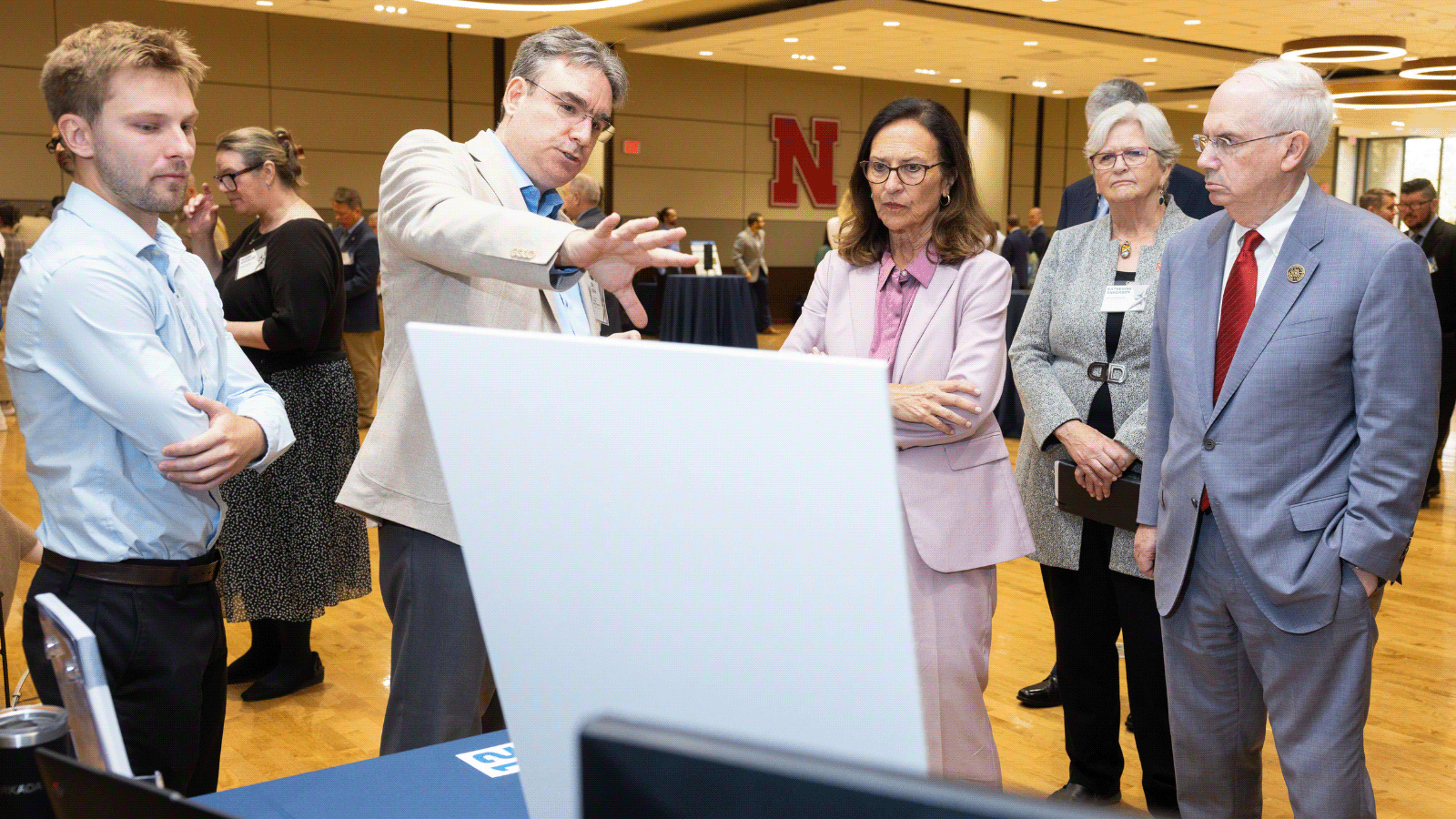
Research featured at the showcase included:
- Drones for Challenging Interactions
- Strengthening America’s Agricultural Front Line
- Uranium Biogeochemistry and Mobility in the Subsurface and Groundwater
- Real-World Operations and Training for CBRNE Response
- Real-World Knee Monitoring for Warfighter Readiness
- Advanced Tissue Modeling to Fight Infectious and Exotic Diseases
- Prophylactic Treatment for Acute Radiation Syndrome
- Real-Time Gait Intelligence for Soldier Readiness
- Threat Vehicle Characterization, Disruption and Containment
- Strategic Mission Planning & Execution System: Database Modernization
- From Discovery to Defense: Scholars Powering Tomorrow’s Solutions
- Artificial Intelligence Enabled Transceivers for Dynamic Spectrum Sharing Applications
- Advancing Environmental Sampling for Pathogen Surveillance
- Distributed Early Warning of Biological Threats
- Testing, Development and Deployment of Biological & Chemical Defense Technologies
The format reflected NSRI’s role as a UARC: creating direct pathways between mission requirements and the people, ideas and capabilities that can address them.
“Central to our public purpose is national security, and one of our most priceless national assets is the National Strategic Research Institute,” Dr. Gold said. “Today’s discussions remind us that the challenges ahead are serious, but the opportunities to contribute are significant. NSRI, our university and our partners stand ready to advance the mission.”