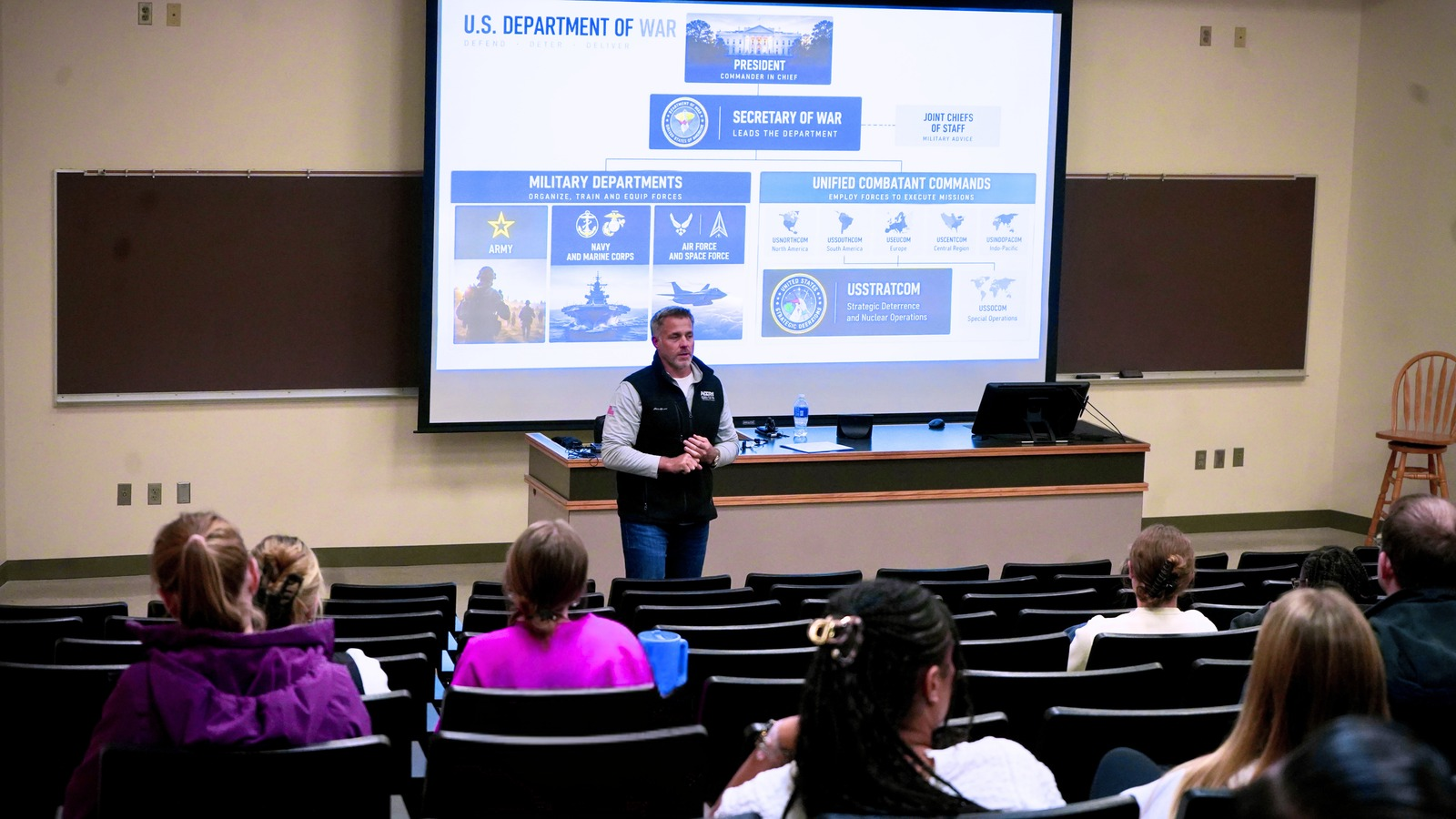
of Nebraska at Kearney on November 5, 2026.
Students and faculty gathered at the University of Nebraska at Kearney on November 5 for a Department of War (DOW) Forum featuring Adam Carlstrom, associate executive director for strategic deterrence and nuclear programs at the National Strategic Research Institute (NSRI) at the University of Nebraska.
Drawing on nearly three decades of military service and leadership experience with U.S. Strategic Command (USSTRATCOM), Carlstrom provided attendees with an inside look at the role strategic deterrence plays in national security and how research partnerships between the University of Nebraska System and DOW help address some of the nation's most complex challenges.
Carlstrom oversees NSRI's strategic deterrence and nuclear programs focus area and serves as a key liaison between NU and USSTRATCOM, which is headquartered at Offutt Air Force Base near Omaha.
Throughout the discussion, Carlstrom explained how USSTRATCOM serves as one of the nation's combatant commands and is responsible for overseeing strategic deterrence, nuclear operations, missile threat assessment, missile defense integration and nuclear command, control and communications.
He emphasized that the purpose of America's strategic deterrence posture is not the use of nuclear weapons, but rather preventing conflict before it occurs.
"The longest period of global peace in recorded human history has occurred during the nuclear era," Carlstrom said. "The theory is that deterrence works because nobody wants to cross that threshold. The objective is deterrence. The goal is to prevent conflict and avoid escalation."
Carlstrom went on to outline the importance of cybersecurity, electromagnetic spectrum, space defense, advanced missile systems and the global supply chain. He also emphasized that today's security environment differs significantly from previous eras because the United States must consider multiple nuclear-capable adversaries simultaneously.
As one of only 15 University Affiliated Research Centers (UARCs) in the nation, NSRI can serve as a problem solver across all of these areas. In its UARC role, it connects national security needs with academic expertise and innovation.
Carlstrom highlighted several examples of university-led research, including a project that has improved decision-support processes for military leaders by reducing analysis timelines from hours to seconds, demonstrating how academic expertise can have real-world operational impact.
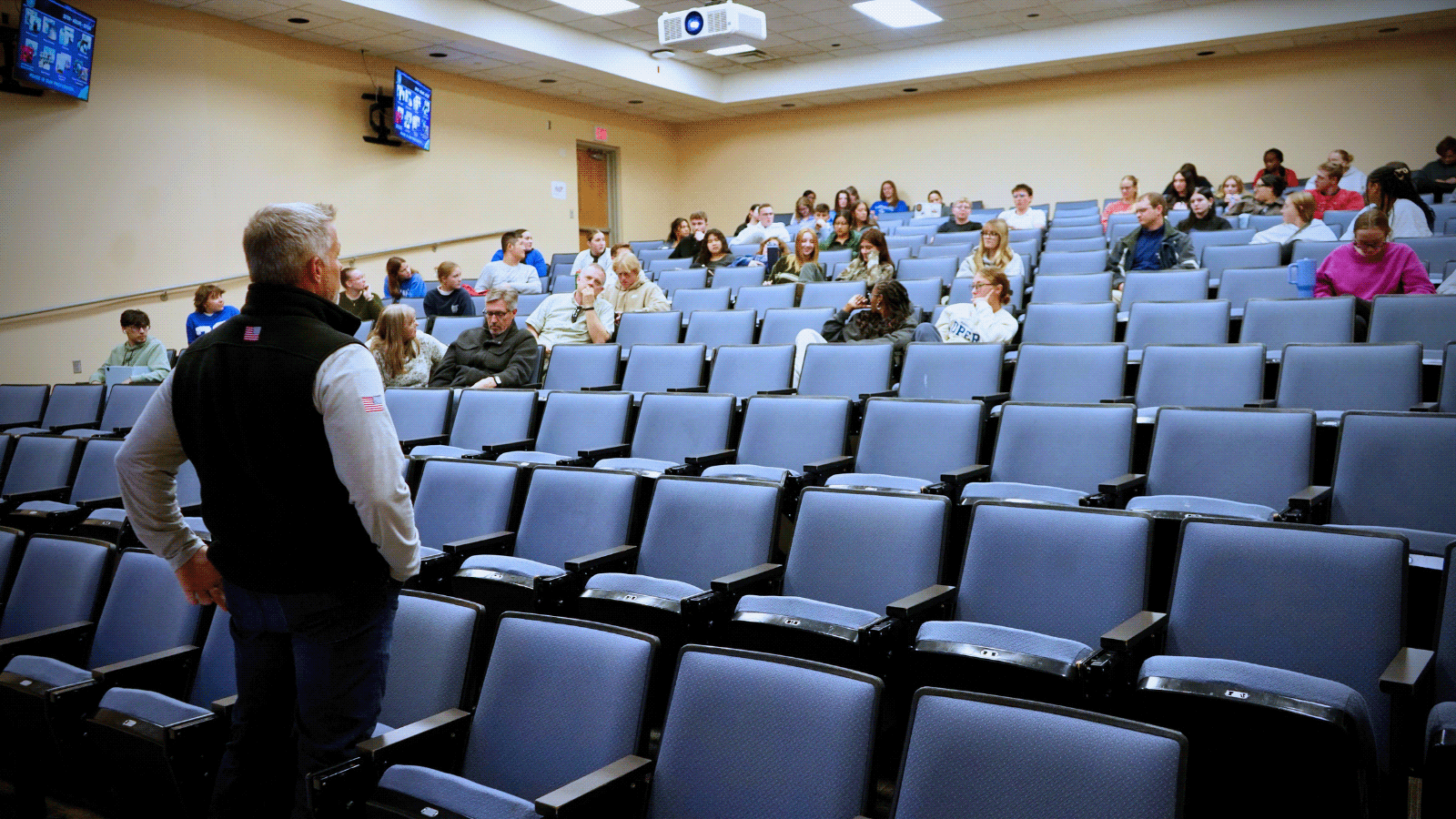
Forum at the University of Nebraska at Kearney, November 5, 2026.
The evening's most engaging discussions were spurred by student questions. One student’s question about the psychology of decision-making led Carlstrom to share that while strategic deterrence is often associated with technology and military capability, human behavior remains a critical consideration.
Social sciences and behavioral research help leaders understand how decisions may be interpreted by adversaries, allies and civilian populations, he said. Factors such as public perception, civilian impacts and second-order effects all contribute to strategic decision-making.
"When the commander is presented with an option, there's concern about more than military outcomes," Carlstrom said. "There are social, political and humanitarian considerations that factor into the decision calculus."
Another student asked about the impact of artificial intelligence on deterrence and military decision-making. Carlstrom described AI, or “super intelligence,” as a tool that can dramatically increase the speed of processing information and delivering insights to decision-makers, particularly in time-sensitive situations.
"We've streamlined decision-support processes using AI that took hours and reduced them to minutes," he said. "However, there will never be a computer that makes a strategic decision. There will always be a human making that decision."
He also acknowledged concerns regarding misinformation, data integrity and the risks associated with rapidly advancing technologies, emphasizing the need for trusted data and responsible implementation.
When asked about his own journey from student to military leader, Carlstrom shared lessons learned from a 27-year Navy career. As an accounting major who ultimately became a naval aviator and senior military commander, he encouraged students to pursue work they find meaningful.
"My advice is whatever you do, it's got to be a passion," he said. "If you wake up every day excited to go to work, that's better than winning the lottery."
Carlstrom credited mentors, perseverance and a willingness to pursue opportunities outside traditional pathways for helping shape his career.
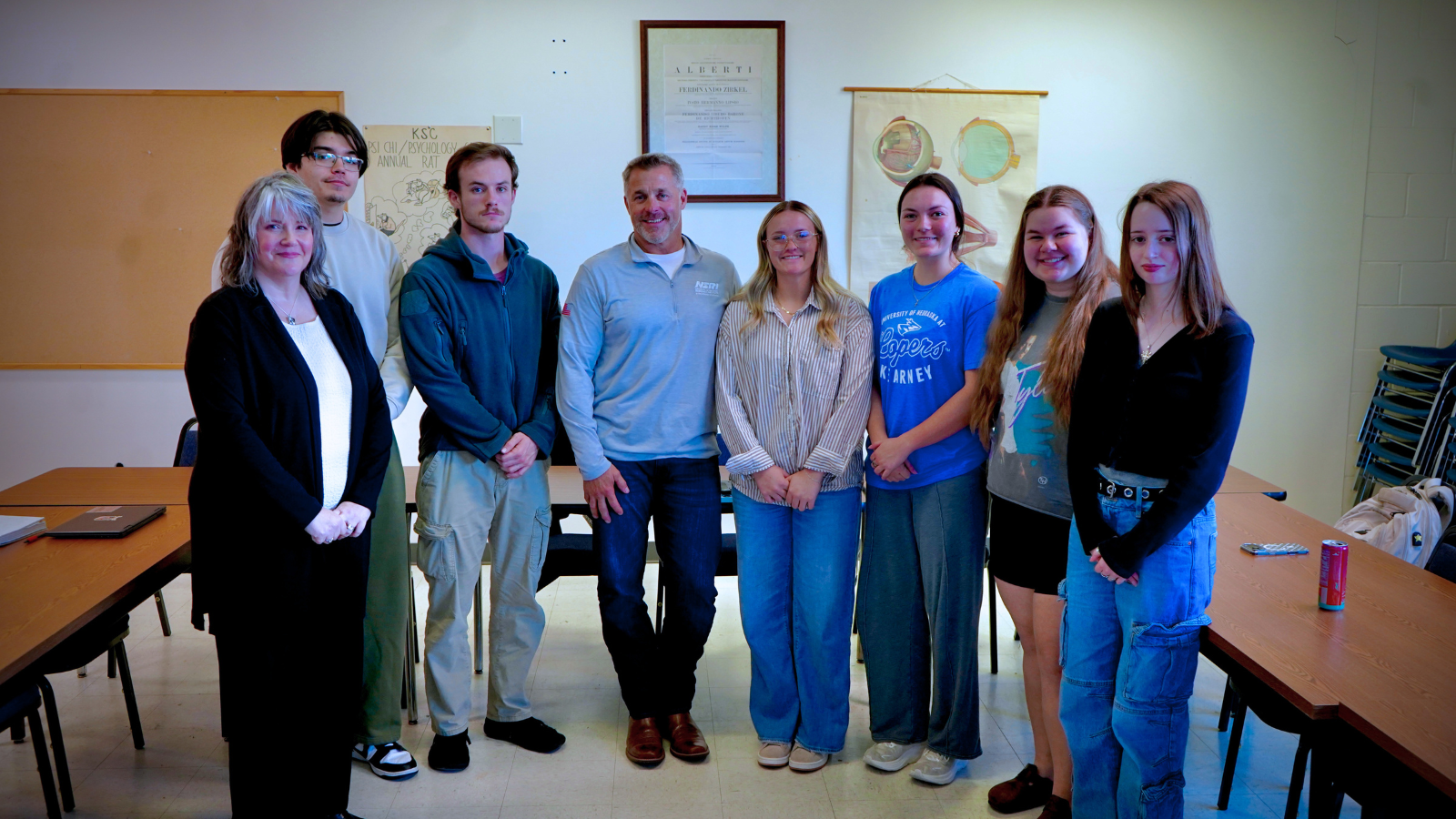
A recurring theme throughout the evening was the importance of developing the next generation of scientists, engineers, analysts and national security professionals. Carlstrom discussed NSRI's efforts to expand student engagement opportunities and outlined plans for a future scholars program that would connect students with national security research projects, internships and mentorship.
"We need new talent," he said. "We need smart, motivated people who are interested in solving hard problems."
He encouraged students from all disciplines, including engineering, business, data analytics, psychology, communications and the social sciences, to consider how their skills can contribute to national security.
"People are what drive ingenuity," Carlstrom said. "They're what sustain the future force."
Learn more about NSRI strategic deterrence and nuclear programs at nsri.nebraska.edu/nuclear.