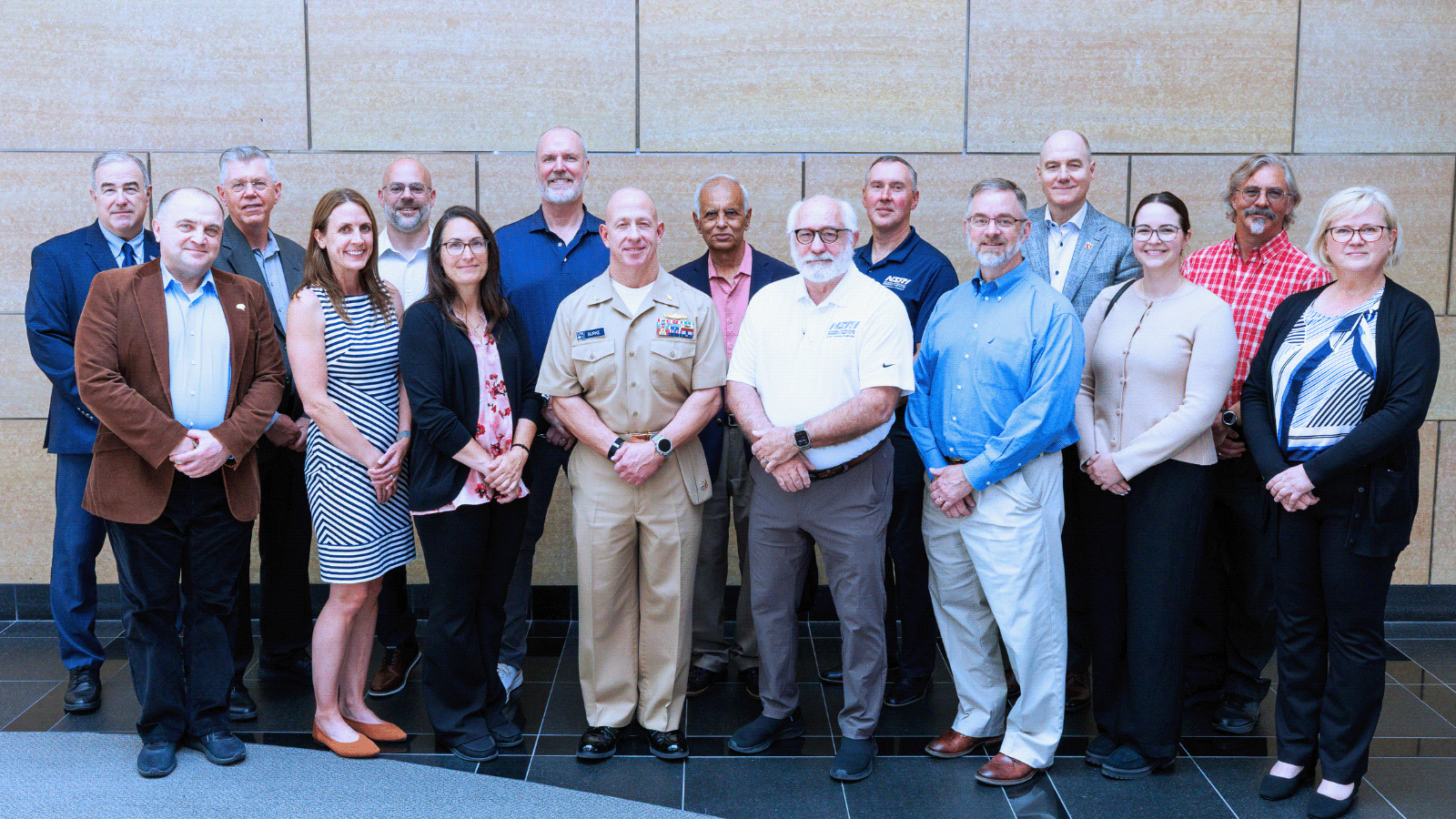
Senior leaders from the Defense Health Agency (DHA) and the Armed Forces Radiobiology Research Institute (AFRRI) recently visited the University of Nebraska System (NU) for a two-day engagement focused on strengthening national defense medical capabilities and accelerating solutions for warfighter protection.
As one of only 15 Department of War (DOW) University Affiliated Research Centers (UARCs), the National Strategic Research Institute (NSRI) at the University of Nebraska led the engagement, ensuring the visit aligned with DHA and AFFRI mission needs and demonstrating NSRI’s unique role in connecting operational priorities with NU’s scientific expertise and research infrastructure.
DHA, AFFRI, NSRI and NU are collaborating on development of a first‑of‑its‑kind prophylactic treatment to protect U.S. troops from acute radiation syndrome (ARS). This project has received more than $35 million in funding from DHA since 2017, including a $24.5 million contract in 2023 for the current phase. The team's progress toward FDA‑aligned evaluation represents one of the most advanced national efforts to counter radiological threats.
“We were pleased to see and discuss the state-of-the-art capabilities at each of the University of Nebraska campuses we visited,” said Dr. Martin LaFrance, DHA research portfolio manager. “The diverse capabilities and partnerships with other organizations provide a strong foundation that we hope will lead to FDA-approved military health readiness solutions for acute radiation syndrome.”
Dr. LaFrance opened the visit at the University of Nebraska Medical Center (UNMC) with an overview of DHA's evolving medical readiness prorities focusing on his operational and environmental medicine portfolio, which includes:
- Traumatic brain injury, including diagnostics, therapeutics and management solutions
- Radiation health effects, including prophylaxis, biodosimetry and combined injuries
- Directed energy, including diagnostics and pathophysiology
- Sensory systems, including sense-organ therapeutics and pain management
- Musculoskeletal injury (MSKI), including Role-1 diagnostics, therapeutics and early preservation
- DOW working dog, including trauma care, pain management, MSKI and environmental injury
From there, the delegation toured several advanced laboratories central to defense health research. Dr. Rebecca Oberly-Deegan's lab conducts efficacy testing of anti-radiation drugs against ARS, and Dr. DJ Murry’s lab leads pharmacokinetic and pharmacodynamic testing on multiple candidate compounds for the ARS project.
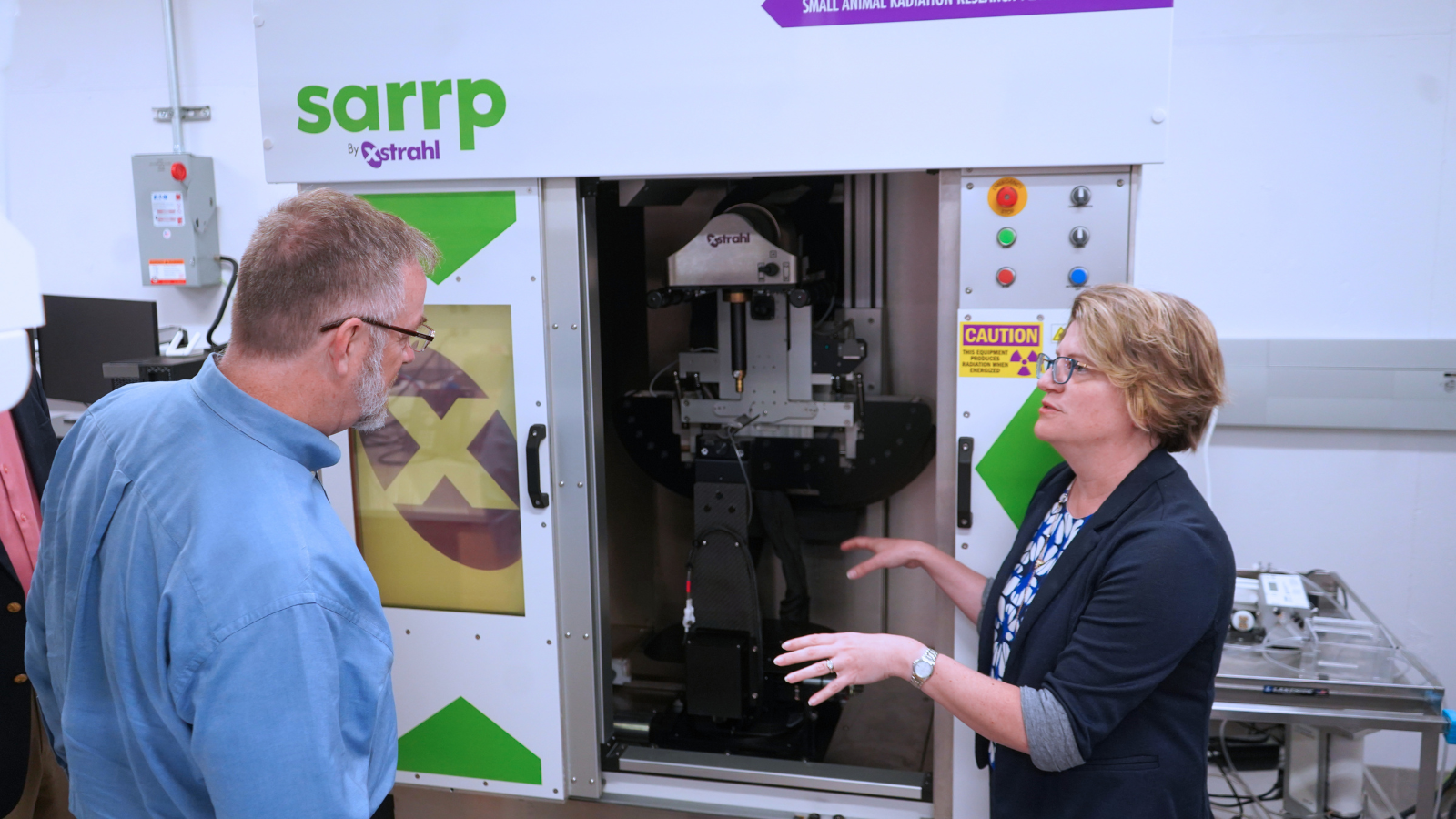
Visitors then examined next‑generation nanomedicine development capabilities vital to DOW’s therapeutic development pathways. Additional stops included the Omics Core, the Advanced Microscopy Core and the Physiological Testing Lab, each offering unique insights into biological responses relevant to DOW medical requirements.
During a working lunch, Dr. Babu Guda, another ARS project contributor, shared advancements in transcriptomics analysis, including specific exampled of how it is being used to find clues into the mechanism of action for the drugs being developed for the ARS program. Visitors also learned more about the work in the UNMC Magnetoencephalography (MAG) Core, highlighting future research potential for defense-related neurological assessments.
"I am extremely proud of our team and the work they do to protect our warfighters,” said Dr. Ken Bayles, UNMC vice chancellor for research. “It was great to be able to share with our federal partners all the resources and expertise we have here at UNMC to foster further engagement.”
In the afternoon, the delegation traveled to the University of Nebraska at Omaha (UNO), where Dr. Sara Myers, associate vice chancellor for research and creativity, welcomed participants before leading them through the world-class biomechanics research building.
Faculty showcased an integrated military boot and exoskeleton studies designed to enhance warfighter mobility and reduce injury risk. They also demonstrated metabolic and vascular performance research — essential pillars of force readiness.
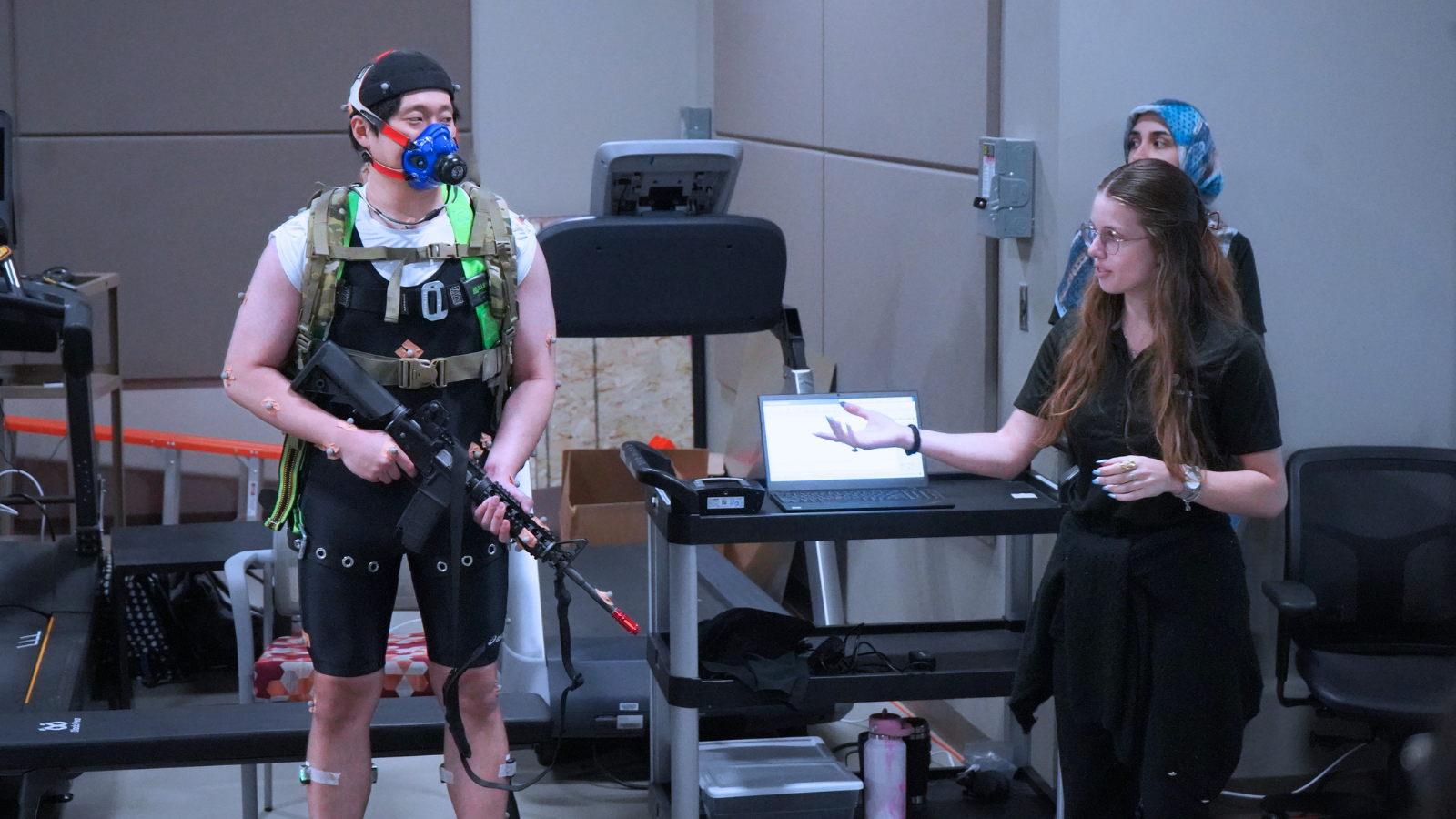
"We were excited to share the impactful research in biomechanics and health and kinesiology," Dr. Meyers said. "Our work with military service members will improve human performance, monitoring and protection from various common exposures. We hope to expand our partnership following their visit."
Day two began at the University of Nebraska–Lincoln (UNL), with Dr. Jennifer Nelson, vice chancellor for research and innovation, welcoming the group and highlighting the Big Ten campus’ expertise and facilities in neuroscience, drug discovery, computing and engineering.
“UNL was proud to showcase the expertise, facilities and instrumentation that the Defense Health Agency can leverage for its important mission areas, including the health and wellbeing of service members,” Dr. Nelson said. “It was exciting to learn more about DHA’s operational and environmental medicine portfolio and to begin identifying opportunities for UNL to contribute to these efforts.”
The UNL tour started at the Center for Brain, Biology and Behavior, which offers state-of-the-art neuroimaging and capabilities and expertise for studying brain injury and health. At Hamilton Hall Dr. Patrick Dussault, the ARS program’s medicinal chemist, showcased his synthesis lab, and Dr. Martha Morton highlighted the Nuclear Magnetic Resonance and Mass Spectroscopy capabilities of the UNL Chemistry Department.
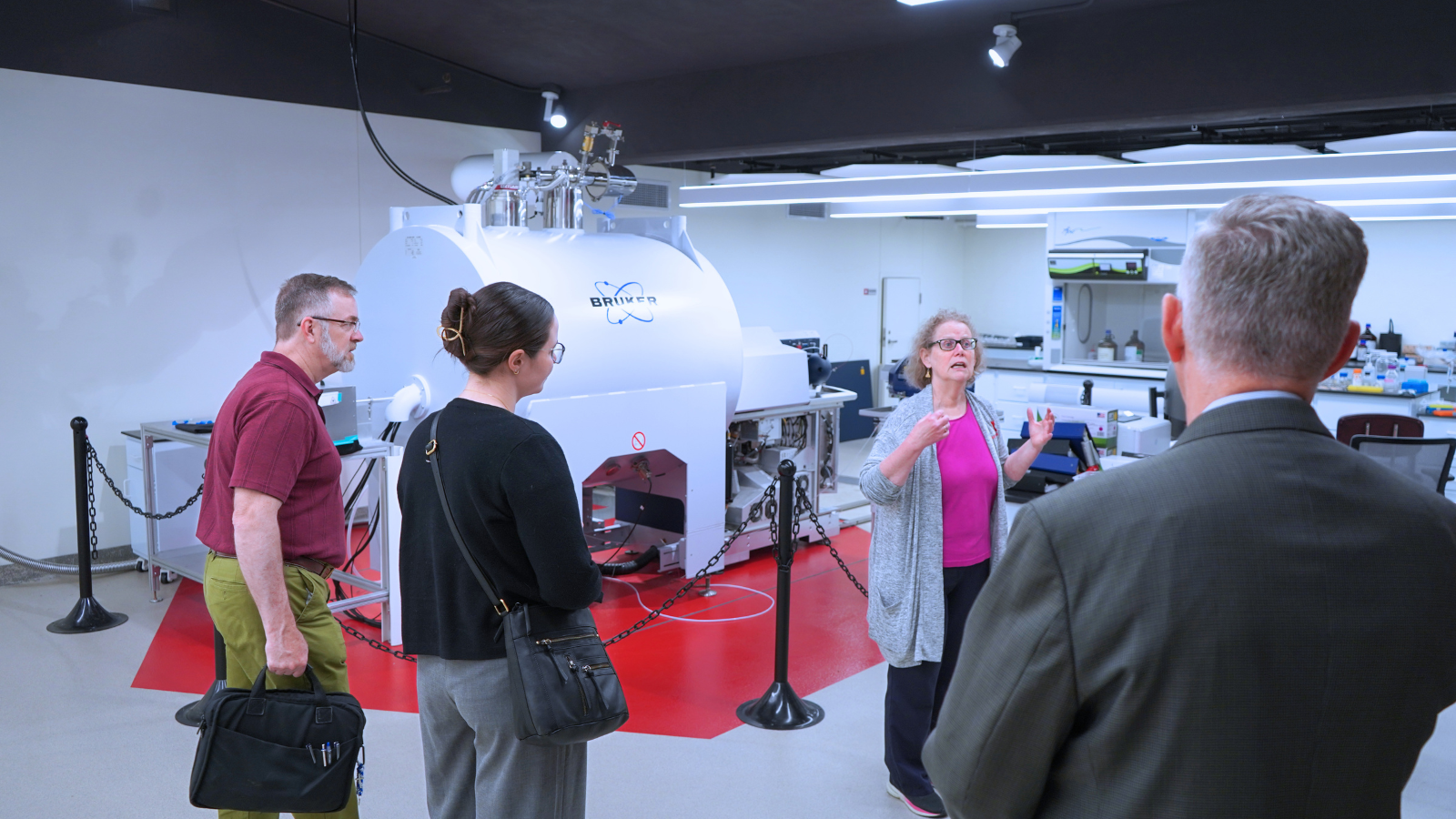
A tour of the Proteomics and Metabolomics Core in the Center for Biotechnology by Dr. Sophie Alvarez Y Albala and Dr. Michael Naldrett showed UNL’s complementary capabilities to the UNMC Multiomics Core, both of which are being leveraged by the ARS project.
ARS project contributors, Dr. Tom Helikar and Dr. Max Pierobon, presented overviews of digital twin work and modeling and simulation work, respectively, and Dr. Amanda Ramer-Tait, who collaborates on the ARS project with Dr. Deegan, presented an overview of the Nebraksa Gnotobiotic Mouse research facilities. To conclude the visit, the group recieved engineering demonstrations of portable biodosimetry, wearable sensors and biological process development capabilities.
At every stage of the engagement, NSRI’s UARC role was evident. The institute provides the national‑security framework that connects diverse scientific strengths to real-world defense needs, helping DHA and AFRRI leaders see not just research excellence, but mission‑ready capability.
"We are grateful for the opportunity to show DHA and AFRRI leaders the depth of talent and commitment across the University of Nebraska System," said Dr. Neal Woollen, NSRI associate executive director. "As a DOW UARC, NSRI, exists to connect mission needs with the right scientific capabilities, and this visit underscored just how powerful that partnership can be. We're honored to work alongside teams who are advancing solutions that truly matter for warfighter protection and the nation's health security."