The National Strategic Research Institute (NSRI) at the University of Nebraska is leading several efforts for joint electromagnetic spectrum operations (JEMSO) to enhance maneuverability across the spectrum and help the U.S. Department of War (DOW) streamline defense operations.
Designated by the DOW as the University Affiliated Research Center for U.S. Strategic Command (USSTRATCOM), NSRI actively leverages its deep bench of experienced JEMSO leaders and academic experts to support the Command’s JEMSO mission — helping ensure growth and superiority of U.S. EMSO, a critical component for the Joint Military Force that transcends all physical domains.
Four projects were active throughout 2025, with one completed and three continuing into 2026. Total awarded funding for the four projects is more than $3.3 million.
Characterization of the EMSO Environment
Launched in late 2023 and delivered in early 2025, this project provided research and analysis for electromagnetic environment instrumentation and data collection to USSTRATCOM’s Joint Center for Electromagnetic Readiness (JCER) Facility, Nellis Air Force Base, Nevada. NSRI provided several scientifically rigorous technical reports to help JCER draw precise, accurate and relevant conclusions regarding the performance of platforms, systems, tactics, techniques and procedures applicable to the Joint Force.
Status: Complete with potential for ongoing efforts
Artificial Intelligence for Dynamic Spectrum Sharing
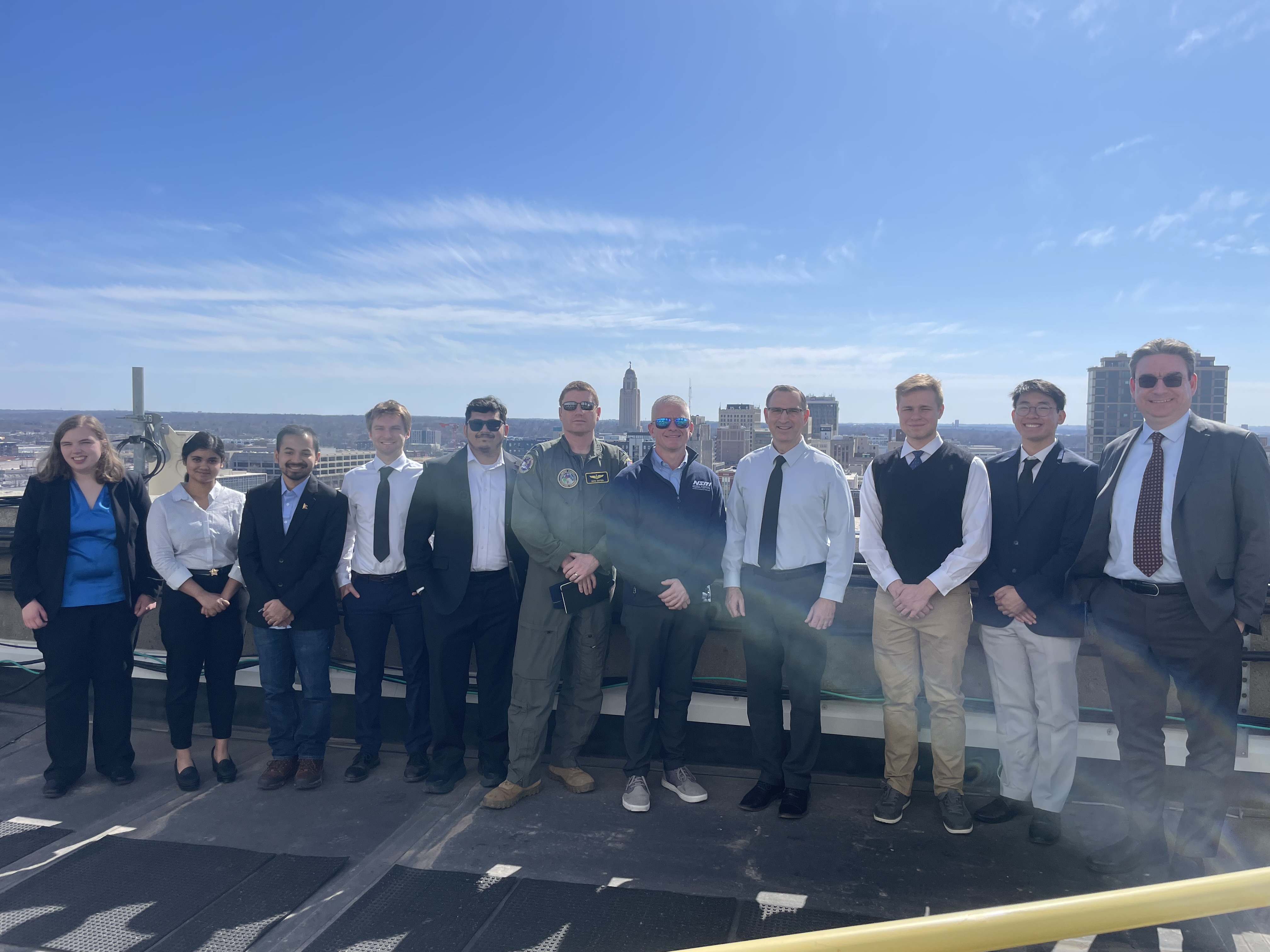
Through NSRI, Dr. Mehment Can Vuran, Dale M. Jensen Chair Professor in Computing at the University of Nebraska–Lincoln, is leveraging artificial intelligence (AI) — frameworks, including large language models, reinforcement learning and unique convolutional networks — to adapt to interference and changing conditions within the electromagnetic spectrum (EMS). As the EMS becomes more crowded and complex with signals from phones, WiFi, military systems, potential jamming, etc., these AI-powered radios will learn to find clear channels and maintain strong connections automatically.
"This project represents truly innovative research with significant potential to address critical spectrum sharing challenges facing the Nation," said Allen Geist, NSRI research director for JEMSO. "We are pioneering solutions to one of the most pressing issues in telecommunications today — maintaining essential spectrum access for national defense while fostering greater cooperation with the FCC on shared usage protocols. Dr. Vuran's work is at the forefront of developing technologies that will help resolve these complex spectrum allocation challenges at a national level."
One year into the three-year effort, the research team, which includes six graduate-level students, has designed novel AI technologies that address the limited datasets available for radio frequency (RF) machine learning solutions and developed AI-powered radios that are cognizant of their spectrum environment. The immediate next step is to develop AI-powered dynamic spectrum sharing solutions in contested environments.
Status: On target
Joint Concept for Aerospace Electromagnetic Attack
NSRI researchers have completed a nine-month study of how various agencies and forces consider electromagnetic attack within plans for counter Command, Control, Computing, Communications, Cyber, Intelligence, Surveillance, Reconnaissance and Targeting (C5ISRT). Incorporating electromagnetic attack into the DOW’s Joint Warfighting Concept is critical for ensuring aerospace dominance. The prospectus NSRI researchers deliver will provide a draft for USSTRATCOM to incorporate into the concept. The team is now distilling the study into themes based on an analytical framework they built based on their more than 60 years of combined JEMSO experience.
Status: Preparing to deliver the final product
Joint Spectrum Sensing and Channel Estimation
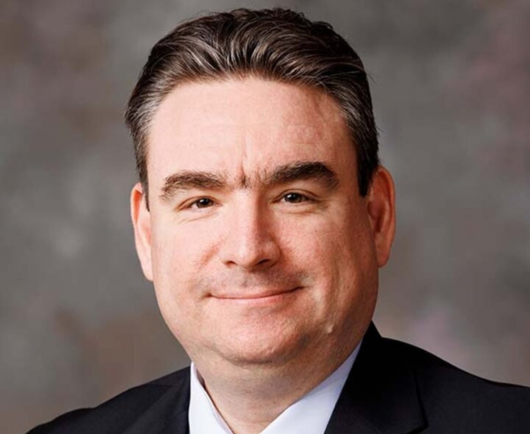
In 2023, Dr. Vuran secured a three-year grant from the Naval Surface Warfare Center to pursue EMSO-related research and development in his area of expertise — wireless communications, AI/ML-based networking and the Internet of Things (IoT). With a prolific 20-year career that includes more than 90 publications and more than 21,000 citations in the field, Dr. Vuran had yet to contribute his expertise to the DOW. This provided him an entry point to continue to grow his body of work and contribute to national security.
"The growing use of spectrum by both friendly and adversarial parties creates a dynamic spectrum environment that is nontrivial to capture through model-driven methods," Dr. Vuran said. "With this new chapter in my career, in this project, we get the opportunity to explore the frontiers of AI technologies that are specifically tailored for RF signals for advanced spectrum sensing and channel estimation."
The project sponsors aptly call Dr. Vuran’s approach "Bespoke AI." He leverages the Nebraska Experimental Testbed of Things (NEXTT), a city-scale gigabit wireless network testbed established on the University of Nebraska–Lincoln (UNL) campus and throughout Lincoln, Nebraska, to evaluate his developed solutions in real-world spectrum environments, making them ready for deployment.
"It has been extremely rewarding to get the opportunity to work with our students in this project — some of the brightest minds at UNL — and see their growth in becoming the next generation spectrum experts," Dr. Vuran said.
With joint spectrum segmentation and modulation classification, as well as complex-valued spectrum sensing solutions delivered, the grant is now allowing Dr. Vuran and his students in the Cyber-Physical Network (CPN) Lab to pursue system-level adaptation for effective deployment of complex-valued neural networks in spectrum sensing applications. The project has supported five graduate students and two undergraduate students, one of whom received the prestigious American Society Naval Engineers Scholarship.
Status: Preparing to deliver the final product
Learn more about NSRI and NU JEMSO capabilities at nsri.nebraska.edu/JEMSO.