
In an era when biological threats are evolving as rapidly as the technology to counter them, the National Strategic Research Institute (NSRI) at the University of Nebraska stands ready with seasoned leadership and proven capabilities to meet the Nation's most pressing defense challenges.
The recent congressional testimony of Dr. Robert Kadlec, who was confirmed as Assistant Secretary of War for Nuclear Deterrence, Chemical and Biological Defense Policy and Programs on December 18, underscored what NSRI and its defense clients have long recognized: Biological defense must be a cornerstone of U.S. national security strategy. Kadlec's declaration that he considers "deploy credible capabilities to deter adversary biological weapons use" as one of his four key priorities makes it clear that NSRI's strategic approach in this critical domain is prudent.
This alignment is no coincidence. Two years ago, Kadlec addressed NSRI staff and University of Nebraska System (NU) faculty and students at an NSRI conference, where he experienced firsthand the commitment of NSRI and the University of Nebraska System (NU) to advancing biological defense capabilities. That commitment crystallized into a comprehensive program that today is optimized and poised to meet the federal government's requirements.

"Effective deterrence requires staying three steps ahead of any threat our adversaries might conceive," said Marty Sikes, NSRI associate executive director for chemical and biological defense programs. "Through our partnerships across the national security enterprise, NSRI is helping ensure our warfighters and first responders never face a biological threat we as a Nation haven't already anticipated — and are prepared to defeat."
Leadership for a New Era
At the helm of NSRI's biological defense program stands Dr. David Blanchard, recently appointed to the new position of research director for biological defense.
With more than 20 years of highly specialized experience at the intersection of science, operations and national security, Dr. Blanchard is a nationally recognized expert in chemical, biological, radiological, nuclear and explosive threats. He has led multi-agency research and development programs and fielded operational capabilities for U.S. Special Operations Command, the Defense Threat Reduction Agency and the Biomedical Advanced Research and Development Authority, among others.

"I came to NSRI to not just innovate, but to deploy innovations," Dr. Blanchard said. "When we leverage the institute's deep national security experience across the biological disciplines with the expertise of four university campuses, we accelerate the transition of technology from research to readiness.
"Our capabilities in rapid prototyping, sensor integration and field-relevant validation mean we can ensure solutions move beyond academic discussion to the theater. We're not only developing tomorrow's tools — we're enabling them to defend the Nation today."
A Team Built for Mission Success
Recent highlight video featuring one of NSRI's five facilities.NSRI's biological defense program draws strength from an exceptional cadre of experts. The team represents more than 235 combined years of experience in biological threat analysis for the Department of War. This depth of knowledge, coupled with the institute's direct connections to operational military units and federal agencies, enables rapid translation of research into actionable capabilities.
The numbers tell a compelling story:
- 17 years of average experience per team member
- 5 recent and active task orders
- 12 customers/agencies served
Responsive and Trusted
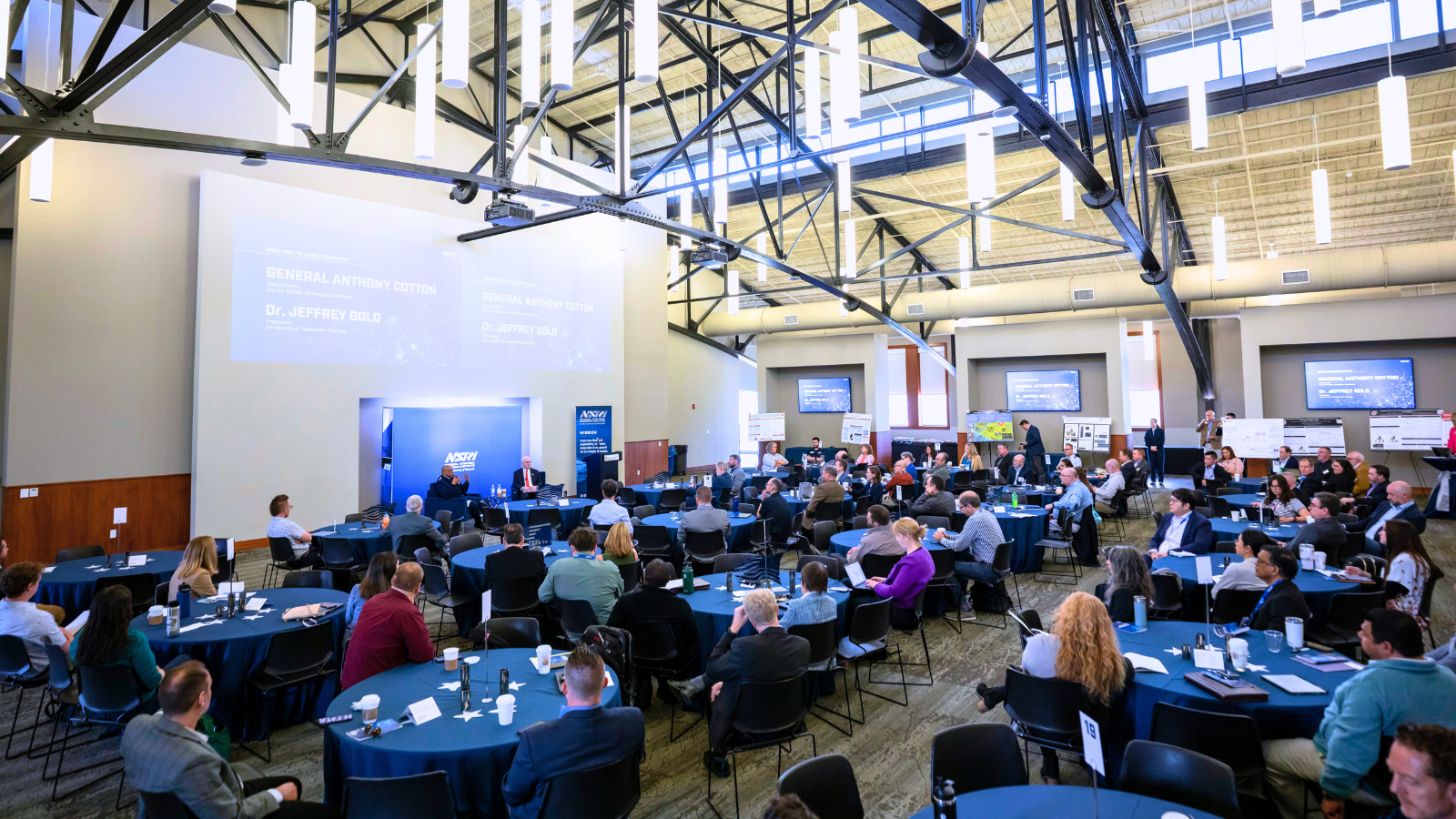
Since 2012, NSRI has served as a University Affiliated Research Center (UARC) designated by the U.S. Department of War and sponsored by U.S. Strategic Command (USSTRATCOM). As a UARC, the institute is a trusted partner to the federal government and accesses an Indefinite Delivery, Indefinite Quantity contract vehicle to make the funding of essential research and development efficient for the agencies that need it.
NSRI is the only UARC sponsored by a unified combatant command. In this singular role, the institute leverages mission-essential research and development capabilities for USSTRATCOM as well as other DOW components and federal agencies focused on strategic deterrence and countering weapons of mass destruction.
Capabilities That Drive Results
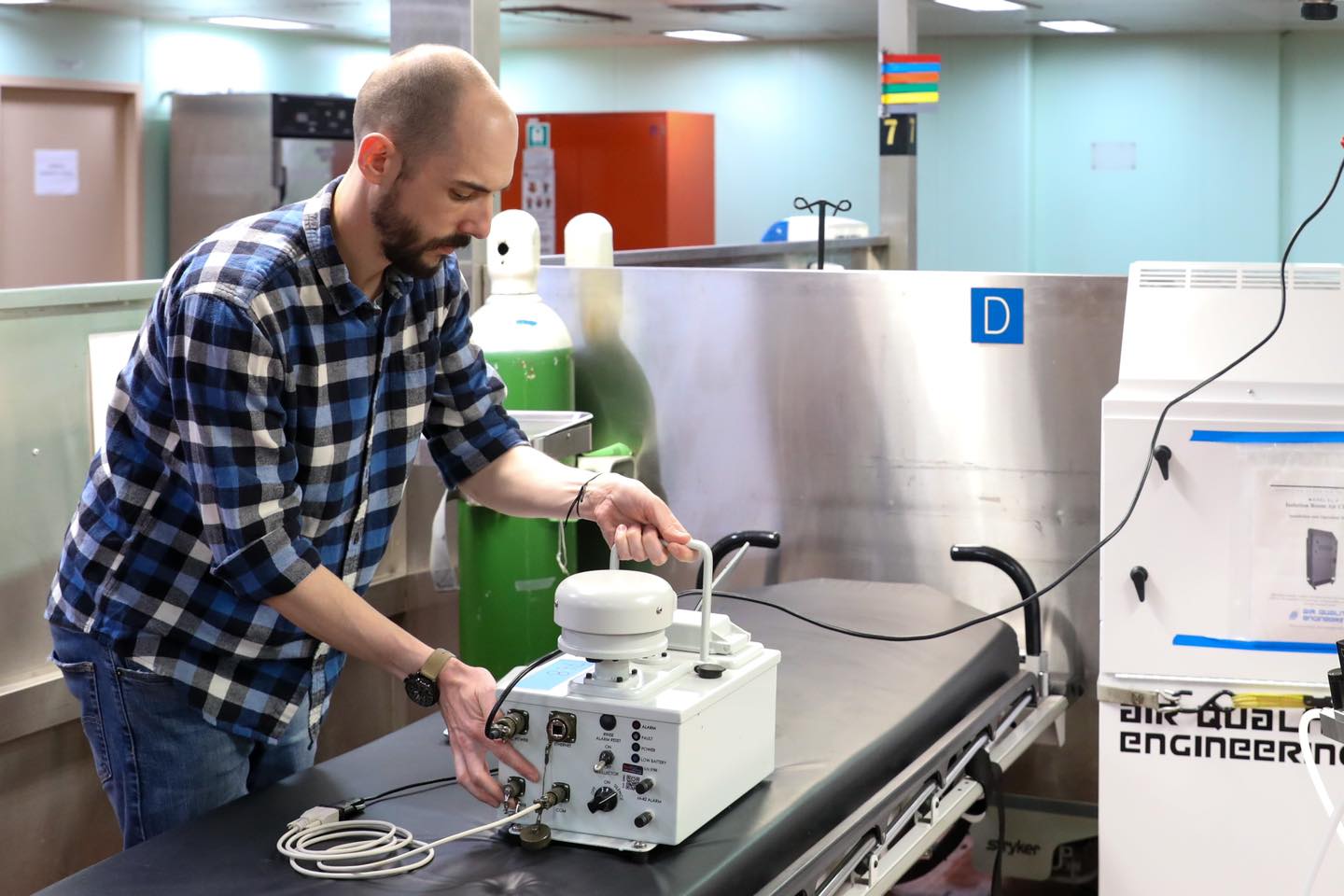
NSRI's biological defense portfolio encompasses a comprehensive suite of capabilities designed to address the full spectrum of biological threats:
- Development of detection, collection, identification and exploitation strategies and technologies
- Hazard detection, decontamination, mitigation and remediation
- Aerosol science: environmental characterization, dissemination
- Materials biology: substrate effects, binding kinetics, surface integration
- Threat and effects: intelligence analysis, modeling, simulation studies
- Technical collection, field exploitation, forensics
- Rapid prototyping and development
- Testing and evaluation, independent verification and validation
"Our promise to the warfighter and first responder is clarity, confidence and speed," Dr. Blanchard said. "The technologies we develop are built for those on the front line of biological defense, those who can't afford uncertainty when facing unseen threats. Every assay we develop, every sensor we validate and every protective measure we advance is designed to give our warfighters and first responders actionable information faster and with greater accuracy. Our mission is to ensure that when the next biological challenge emerges our responders are not reacting in the dark — they are responding with precision and preparedness."
The Path Forward
As biological threats grow more sophisticated — from naturally emerging pathogens to engineered biological systems — NSRI's role becomes increasingly essential. In its established position as a DOW UARC, the institute serves as a critical nexus where academic innovation meets operational demand.
"We are working toward transforming biological defense from a reactive posture to a proactive, data-driven enterprise — one that integrates broad collection, early detection, rapid characterization, and credible attribution of biological threats," Dr. Blanchard said. "In five years, I see fielded technologies that detect and characterize biological threats in real time, seamlessly connecting research, development and operations. When we integrate advanced biosurveillance, predictive analytics and rapid-response platforms, we'll enable our defense partners to anticipate threats before they emerge.
"What seems challenging today — compressing years of development into months of deployment — will become our standard for protecting the Nation. NSRI is positioned as an integral part of this evolution."
Expanded details are available at nsri.nebraska.edu/chembio.